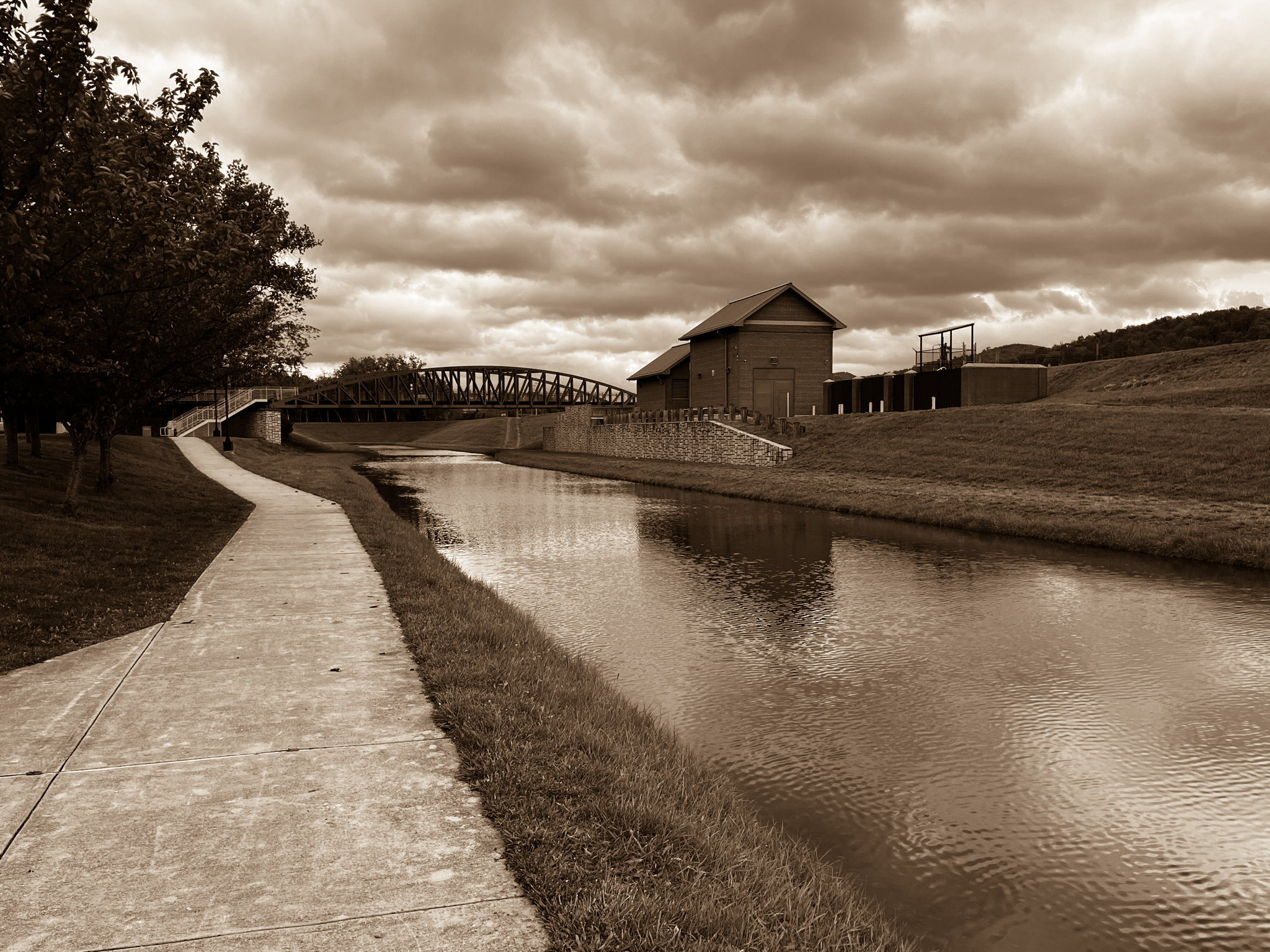
Places change—that is a given. I am fascinated by how they change over time while continuing to tell an ongoing history story. These are places that are well cared for and curated. Fortunately, my travels in 2024 have taken me to incredible places that do just that.
Before I get to the pictures, this past year has been a transition for me personally. I accepted a position at MKSK, a Columbus, Ohio-based landscape architecture, planning, and urban design company with a new studio in my hometown of Chicago. I am excited to work with a talented and experienced group of planners and designers committed to shaping places in the years ahead.
Even with this life change, traveling to new places has been a constant for me this past year. Each and every one of them has unique stories, and all are coming to terms with how to steward their historic and cultural assets best while striving to balance preservation with competing economic and social challenges and needs. I hope you enjoy the photos.
St. Louis and its charming Soulard district
Earlier this year, my work travels took me to St. Louis, Missouri, with the assignment of creating a master set of design standards for future historic districts. St. Louis already has eighteen local districts with established standards to guide physical changes to their historic and architectural resources. This assignment was a chance to see St. Louis up close—it is one place I have not visited since my graduate school days when I had a field class assignment focused in neighboring East St. Louis. So many friends and colleagues have told me that St. Louis is the diamond in the rough—a historic city that does not get its own share of recognition. Maybe it has not shaken off the negative image and perceptions of a city in decline. But I did find St. Louis as a diamond in the rough—a city that has kept and managed its historic places better than most. The City of St. Louis and its preservation community and advocates have done their jobs exceptionally well.
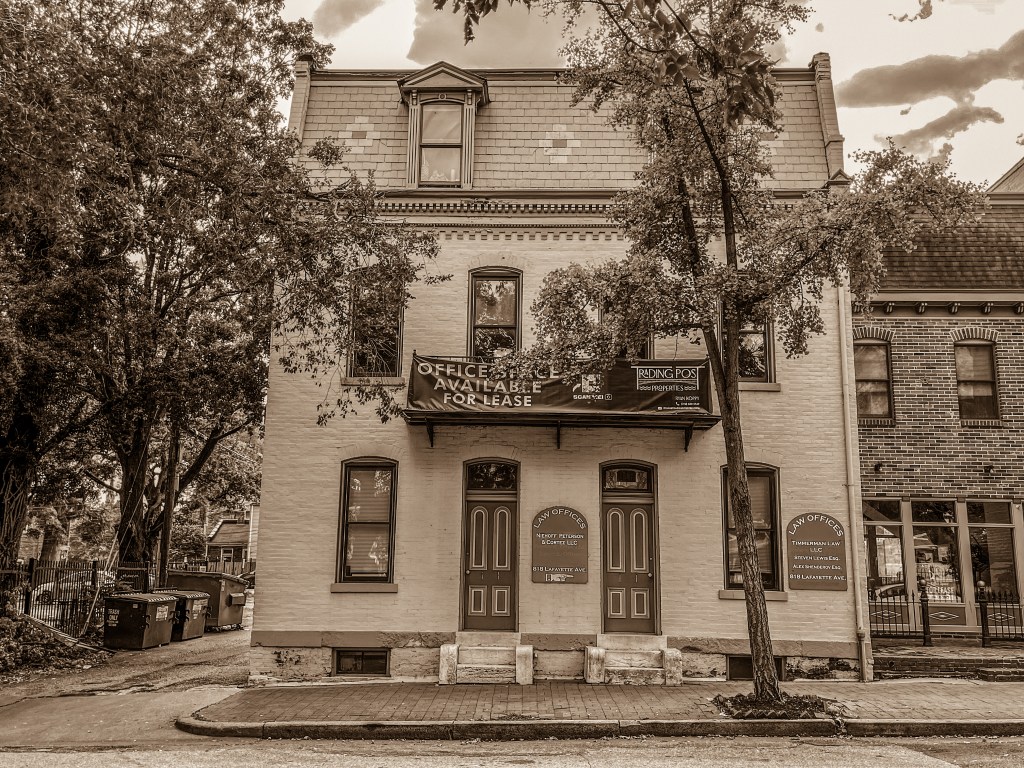
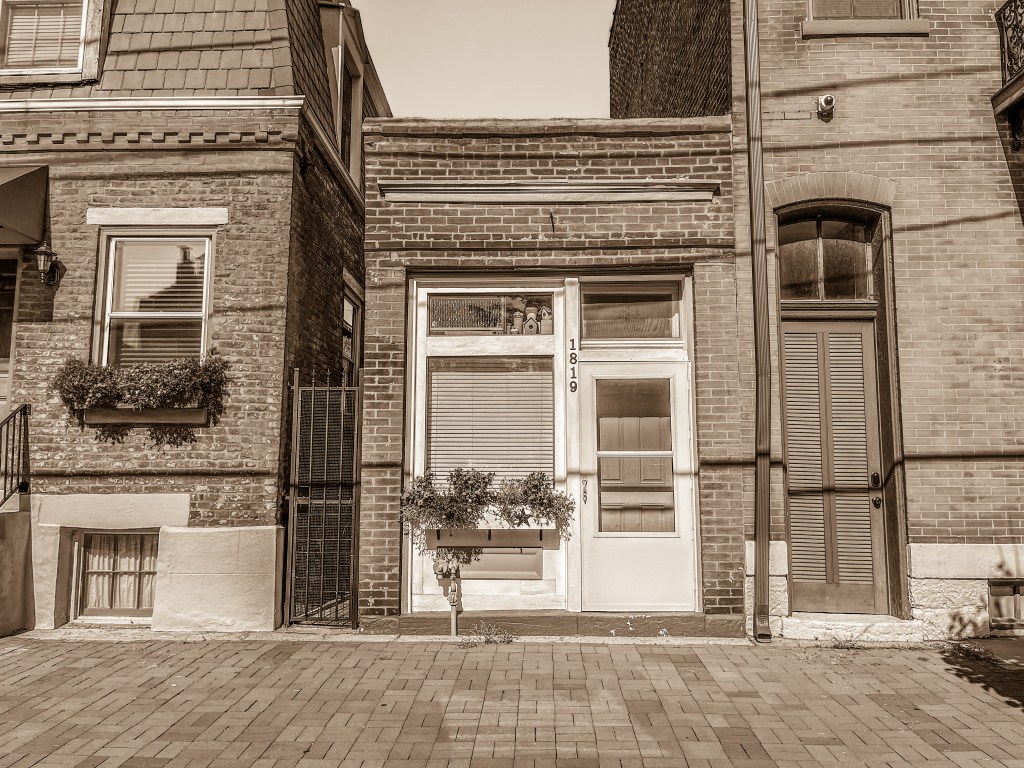
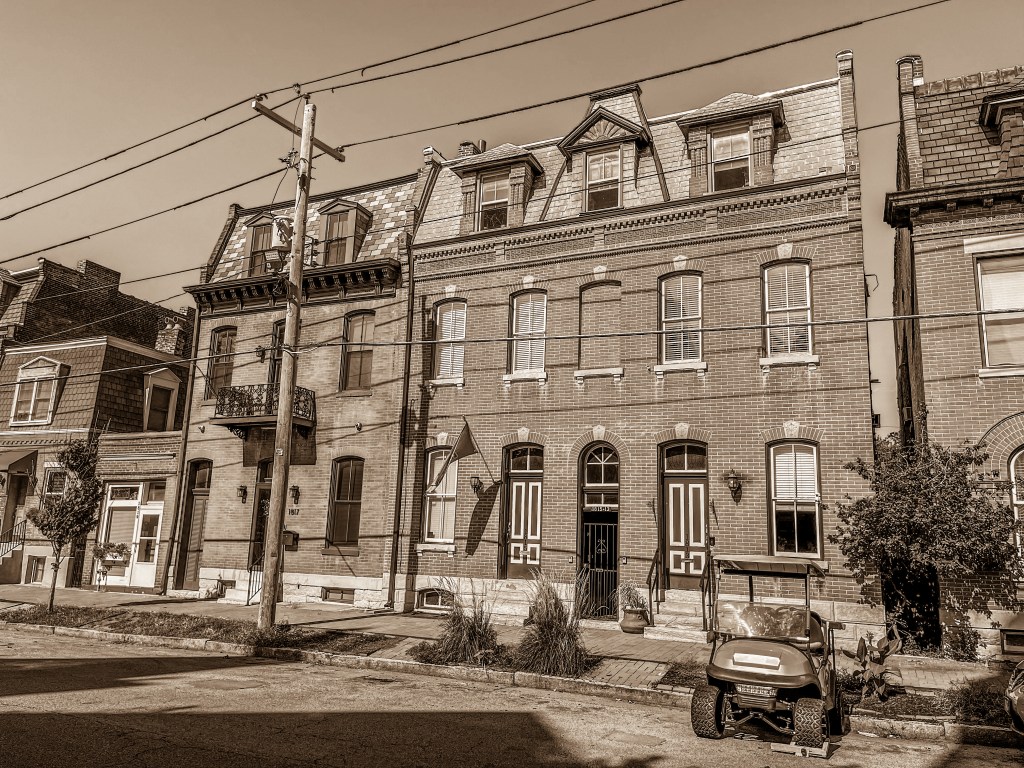
On a whirlwind tour of the historic districts last September with city preservation staff, I was enamored by the Soulard neighborhood. Soulard has been well-curated over the decades—it appears intact as if nothing has changed since St. Louis experienced one of its greatest growth periods during the latter half of the 19th century. You can say Soulard has a patina that is all its own—it looks well lived in. Soulard has a long-running neighborhood association that has played a major role in its ongoing preservation.
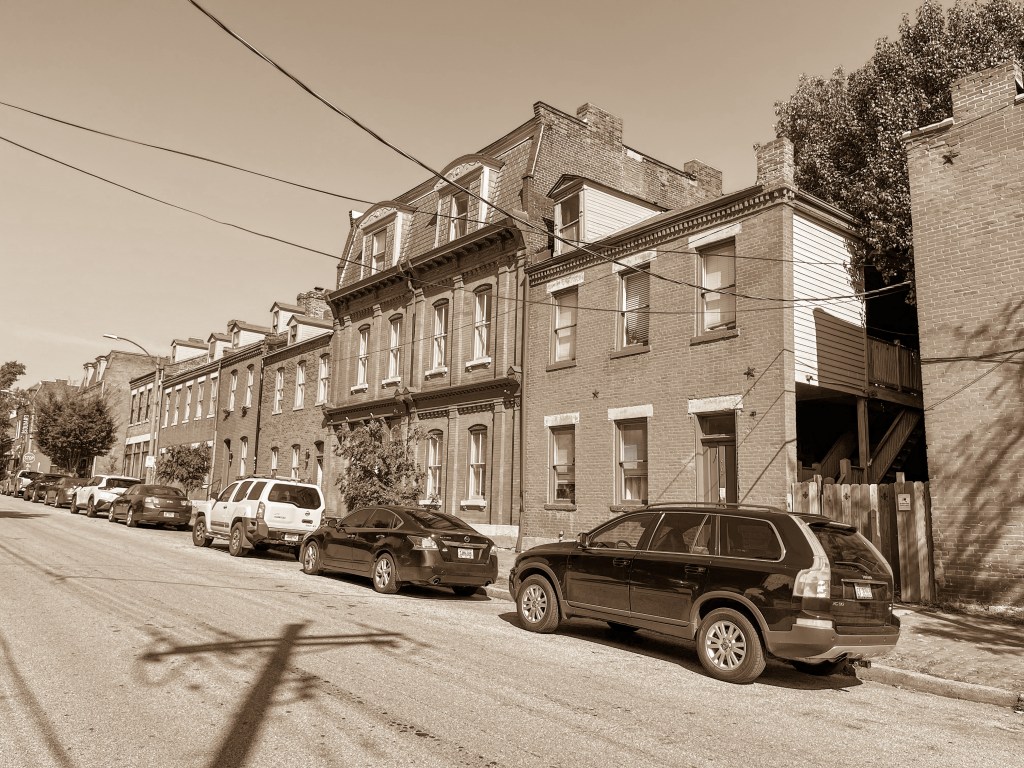
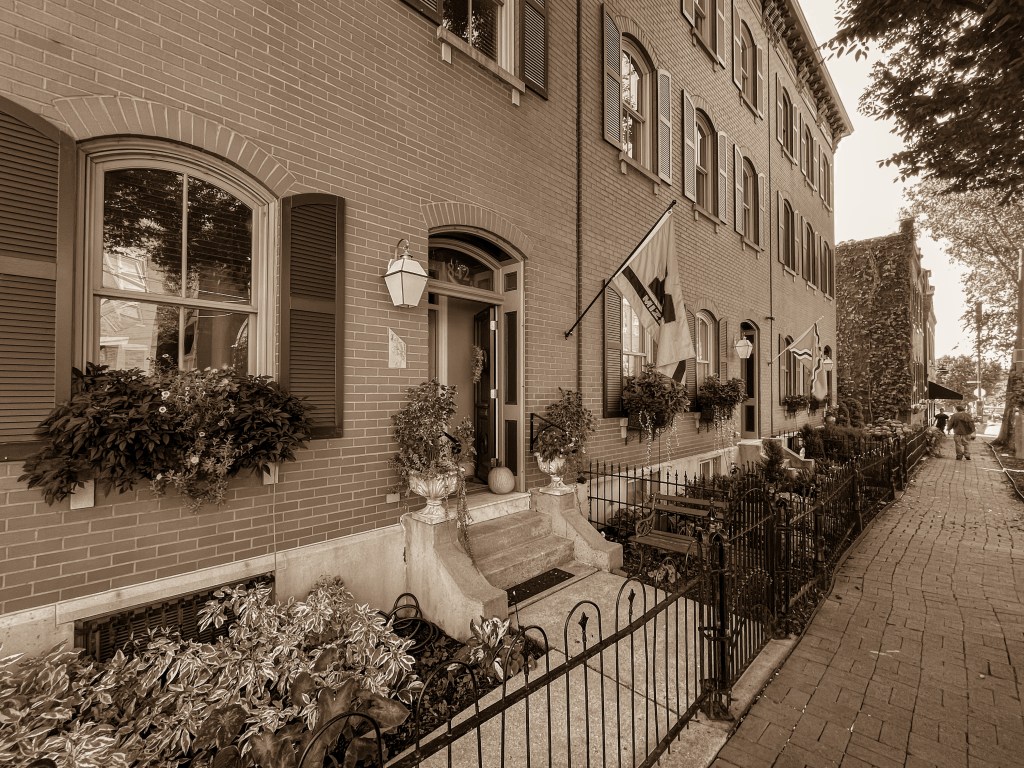
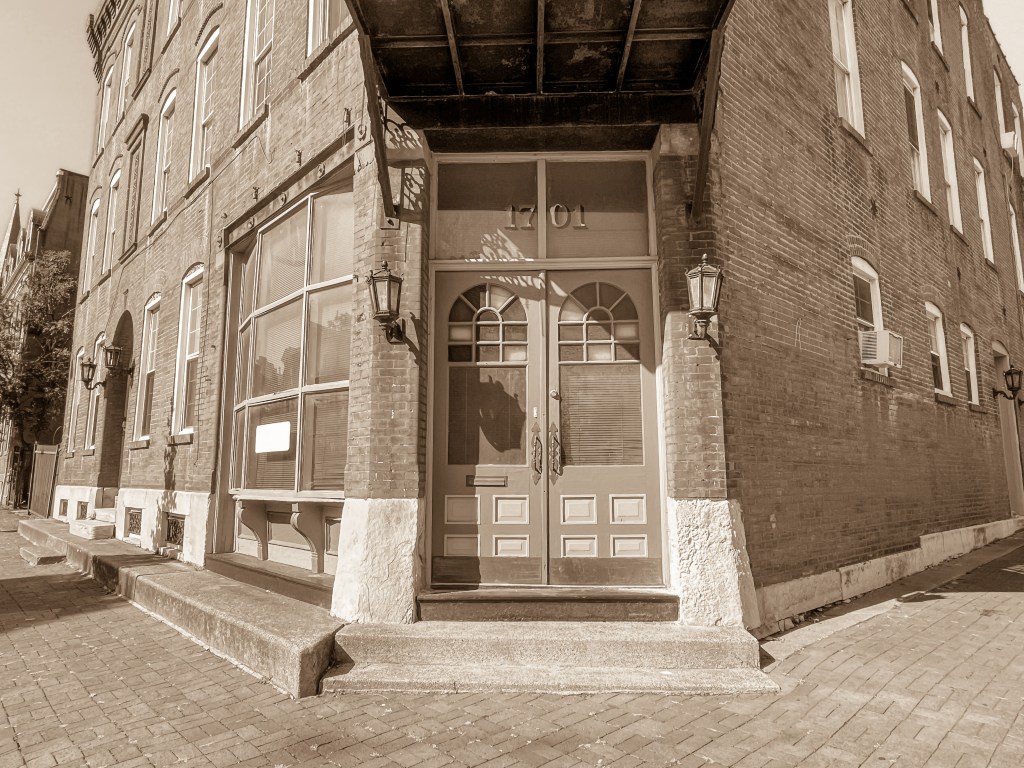
My fascination with Soulard is its blend of Italianate, Second Empire, and Federal-styled domestic and mixed-use architecture that appears both time-worn and authentic. There are very few vacancies, and the residential blocks often feature brick sidewalks lined with mature trees and flower boxes in front gardens—all visual demonstrations of resident pride in the neighborhood.
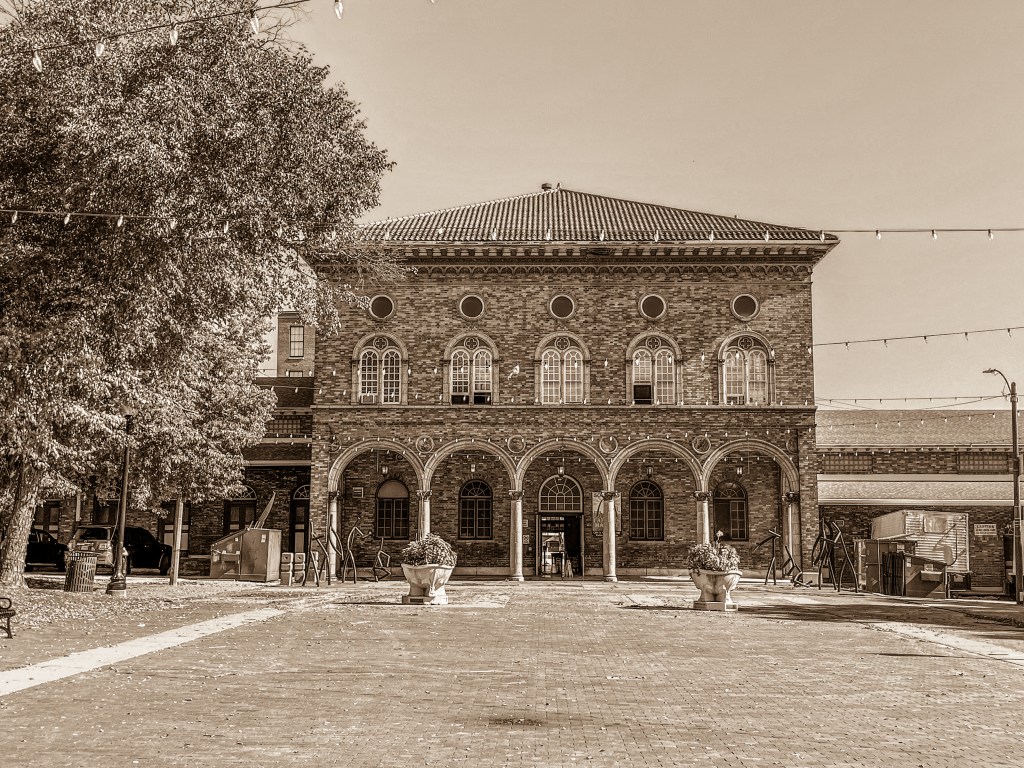
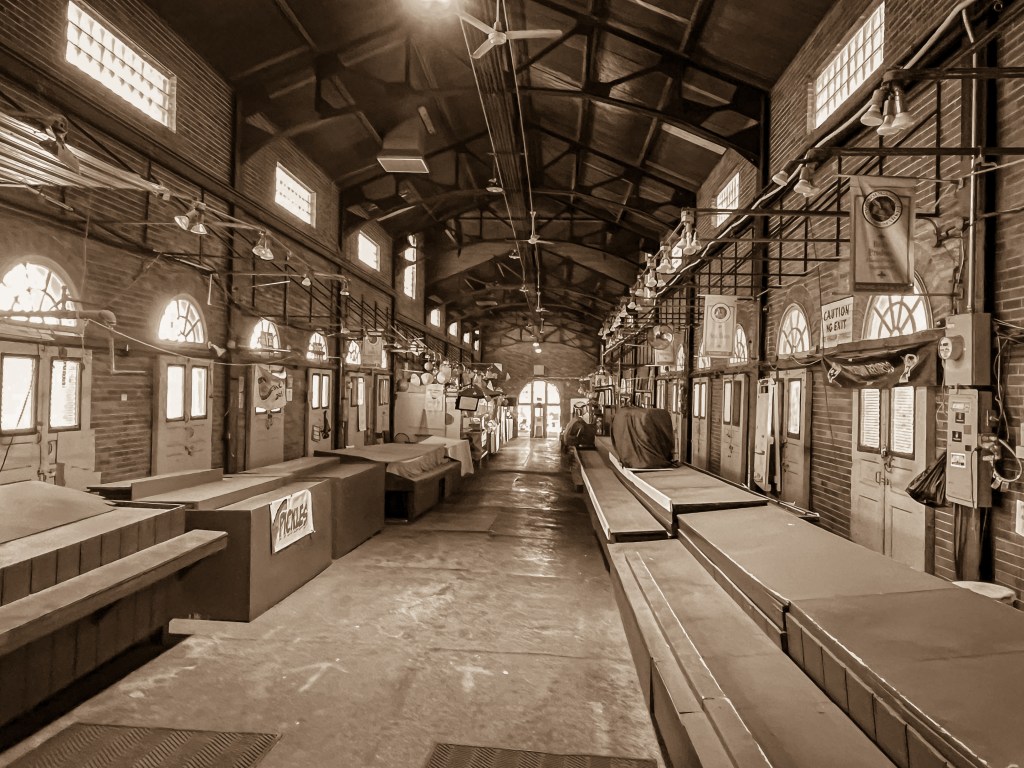
Soulard’s Market Building, constructed in 1929 in the Italian Renaissance style, sits on the neighborhood’s far northeastern edge next to downtown St. Louis. The second such market building erected on the site, with the first dating to the decades before the Civil War, has a compelling presence as Soulard’s economic anchor and primary gathering spot. It is still used today as a market providing fresh food to neighborhood residents.
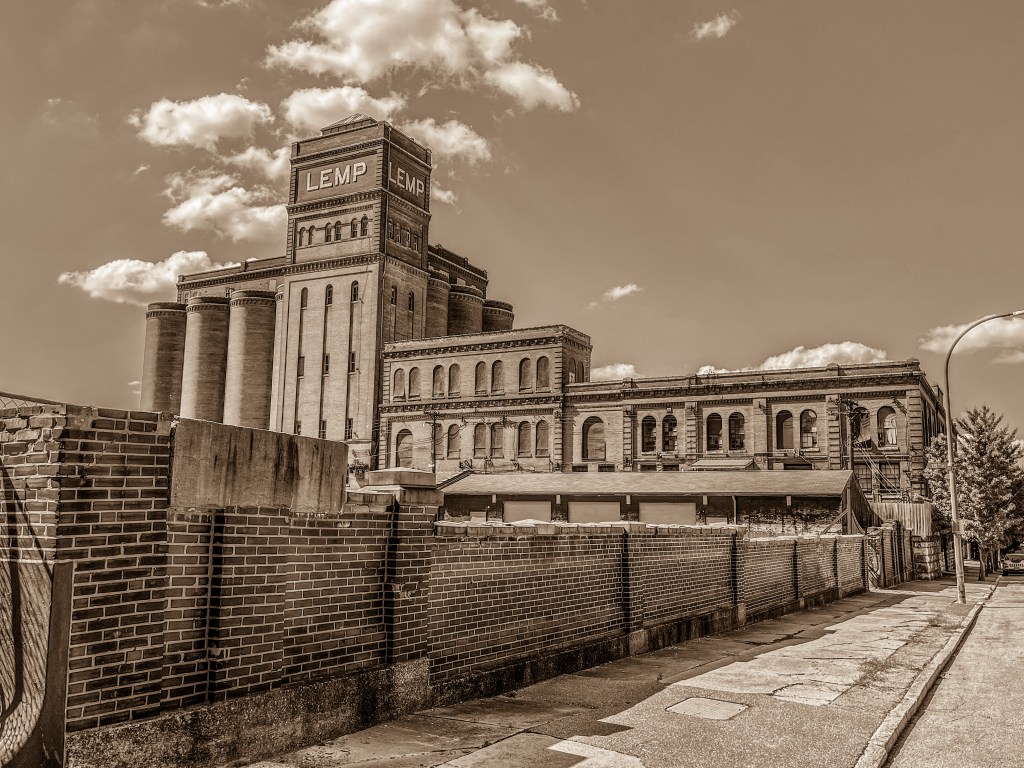
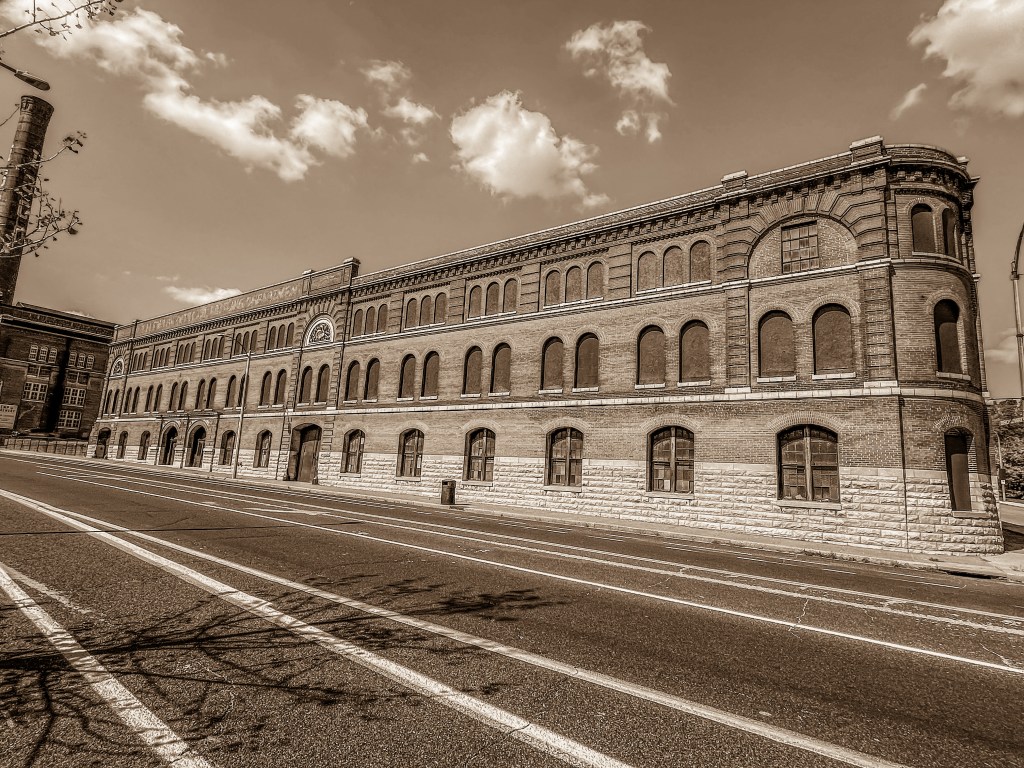
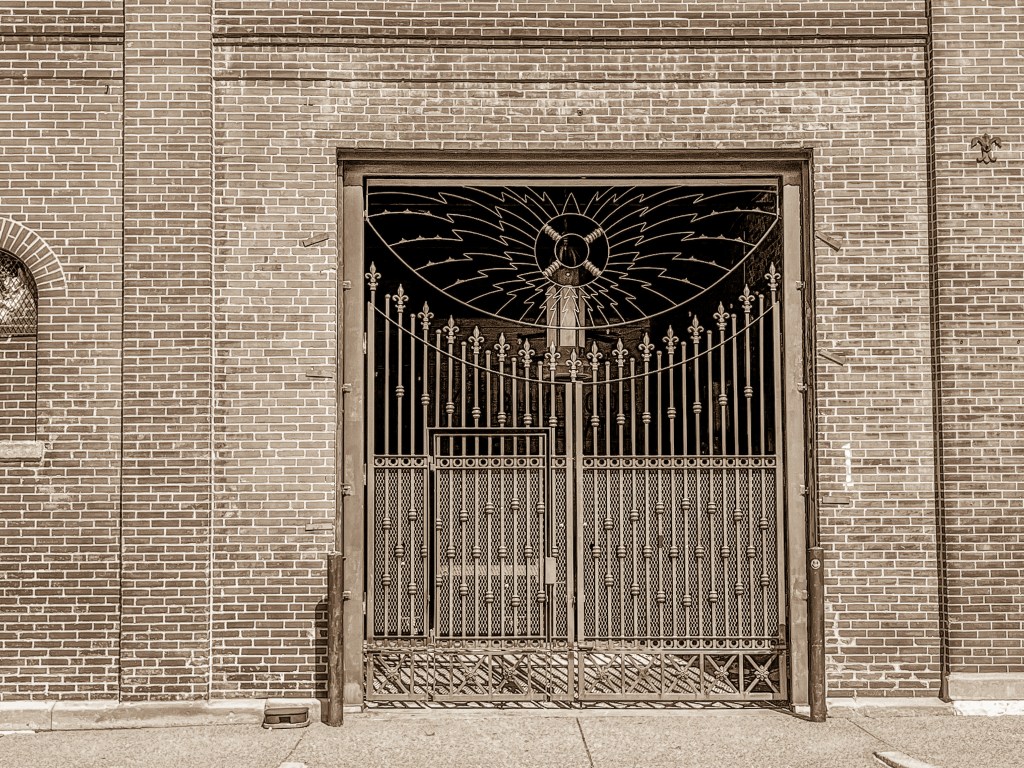
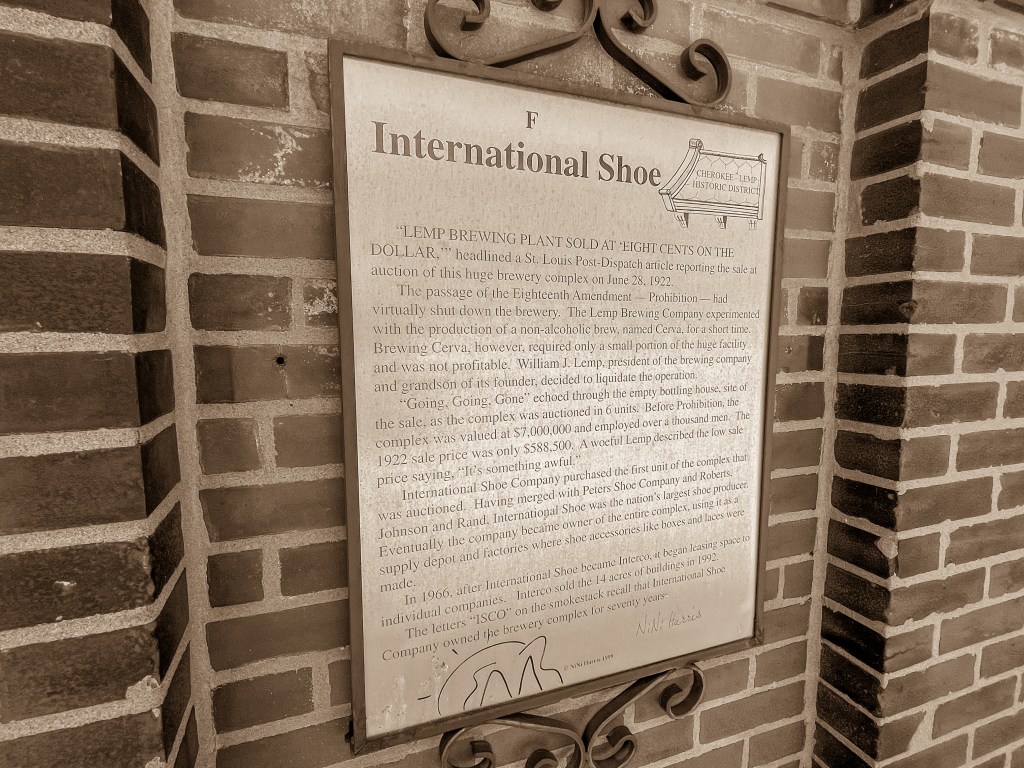
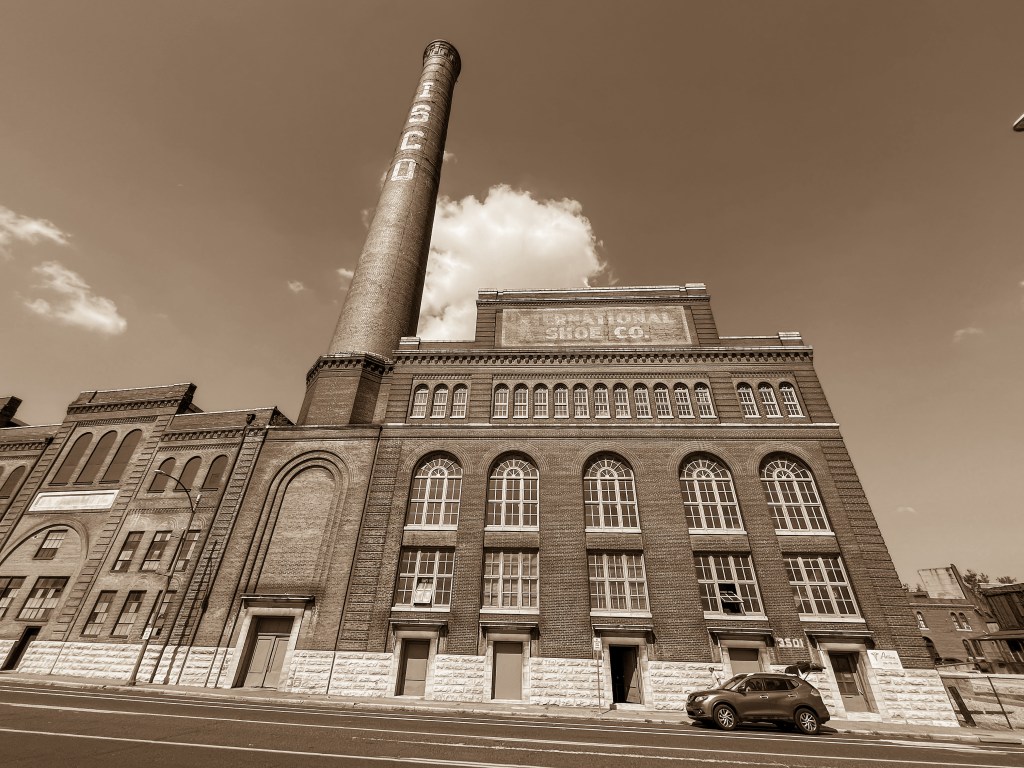
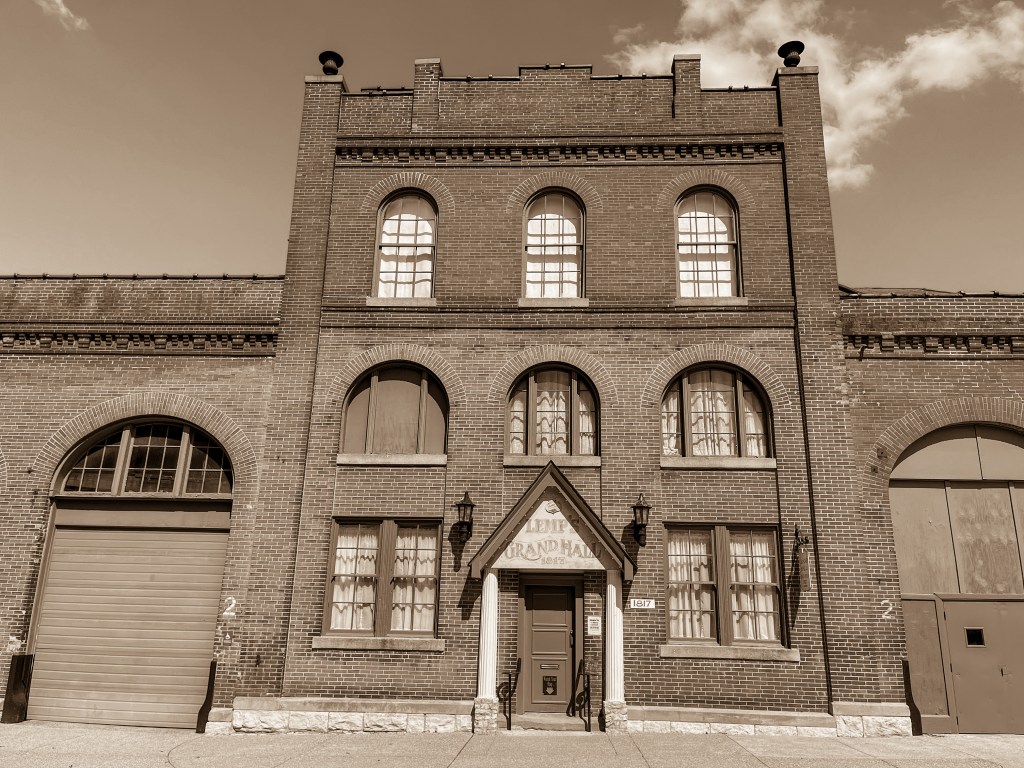
In addition to Soulard, I visited another historic district—the Cherokee-Lemp Historic District in the Benton Park neighborhood near Soulard and another famous St. Louis building complex, the Anheuser-Bush Brewery. The Cherokee-Lemp District was once home to the Lemp Brewery, which started in Benton Park in 1864, once the largest in the city, growing to a twenty-nine-building complex at the turn of the last century. Like many brewers nationwide, its operations ceased with the onset of Prohibition. The complex was later sold to a shoe company. Its marvelous combination of Romanesque, Italianate, and later Classical Revival design influences with dark red brick, arched windows, and cornice line corbeling exudes a Germanic, old-world atmosphere. Four-story, rounded brick granary stacks are also quite impressive.
I could not gain access to the interior courtyard to take more pictures—sidewalk views are all I have. The complex now houses a variety of smaller uses, but it still evokes a sense of time and place when beer was king.
Aggieville and Downtown Manhattan, Kansas
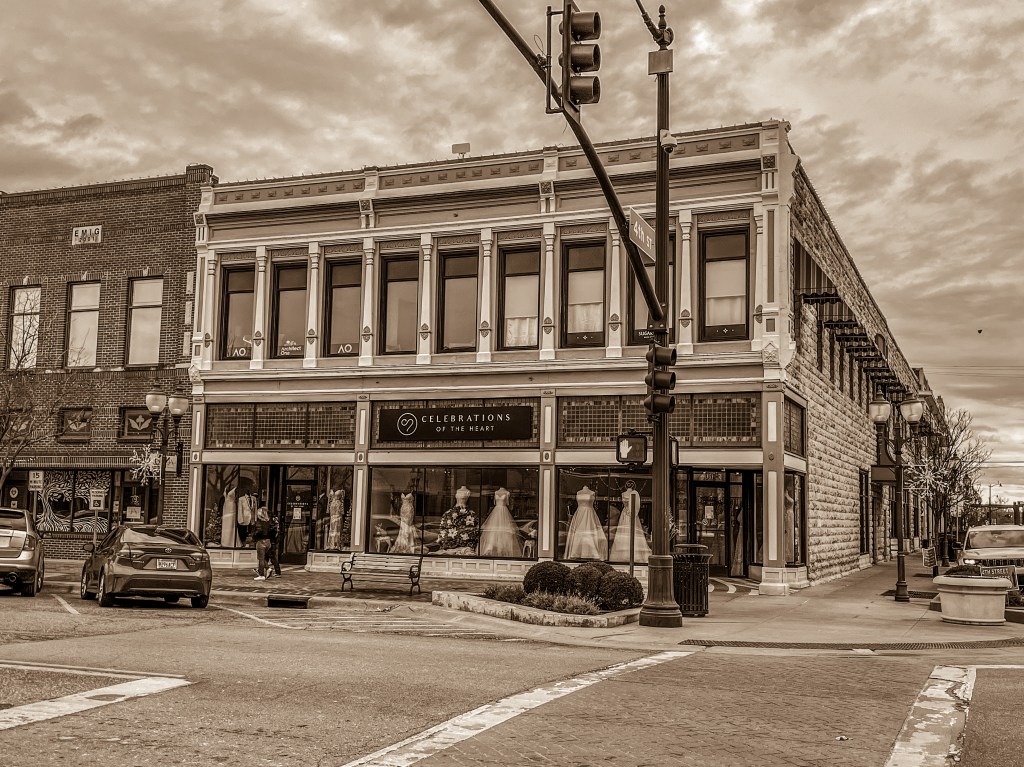
This past month, I visited Manhattan, Kansas, for the first time. The “Little Apple,” affectionately called by locals and visitors alike, was a pleasant surprise. Home of Kansas State University (KSU), one of the first land grant universities in the country, Manhattan has a mix of vernacular farmsteads, Craftsmen bungalows, and Post-War ranches that tell the story of the city’s evolution. Manhattan’s crown jewels are its traditional downtown district, Aggieville—KSU’s campus town neighborhood, and the university campus itself.
Downtown looked vibrant and festive due to the holiday decorations festooning the street lights, and nearly all storefronts were occupied with retail and restaurants. The community had long cared about the downtown district, once sponsoring a long-running and successful Main Street revitalization program. What makes downtown Manhattan interesting is the presence of an enclosed shopping mall at its far eastern end. Built in 1987 with a Dillard’s, a J.C. Penny, and a movie theater complex, one hardly notices it along Poyntz Avenue, downtown’s main retail street. With downtown full of businesses, the community debates whether the shopping mall helped downtown or vice-versa. The mall still has its original anchor tenants.
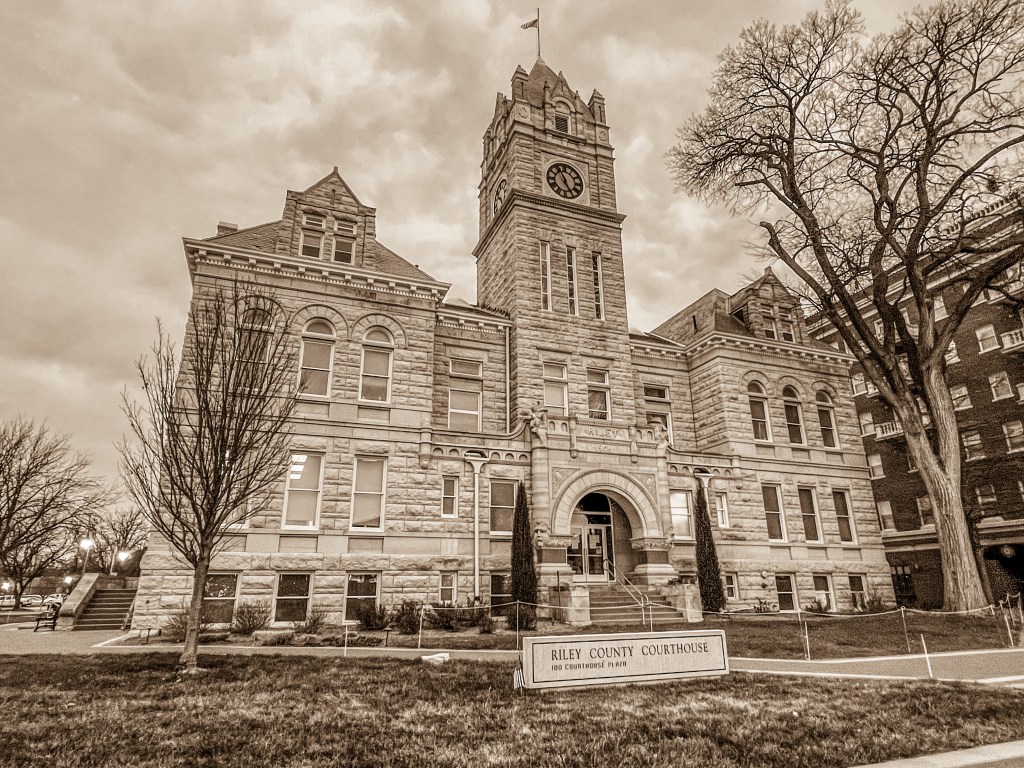
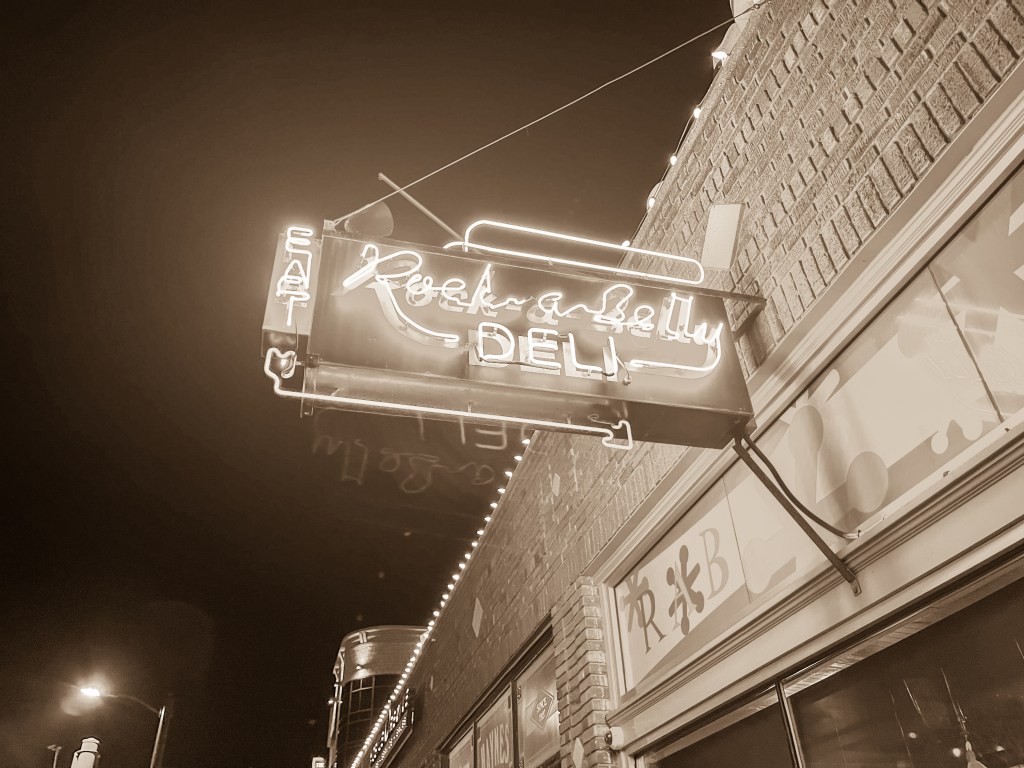
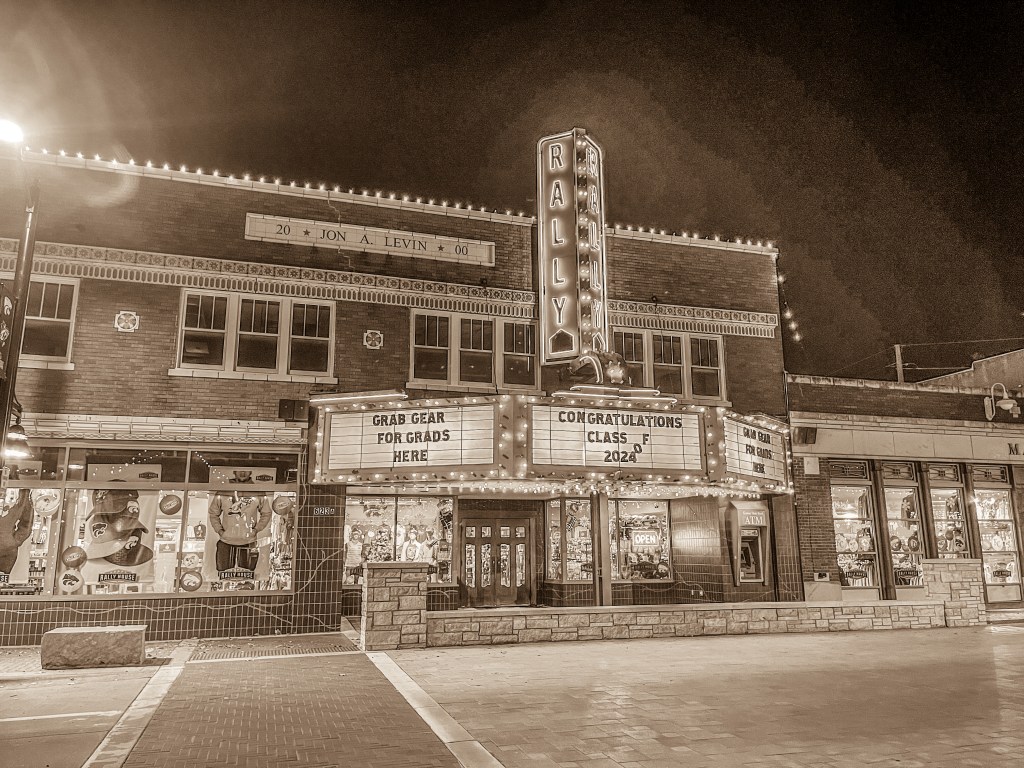
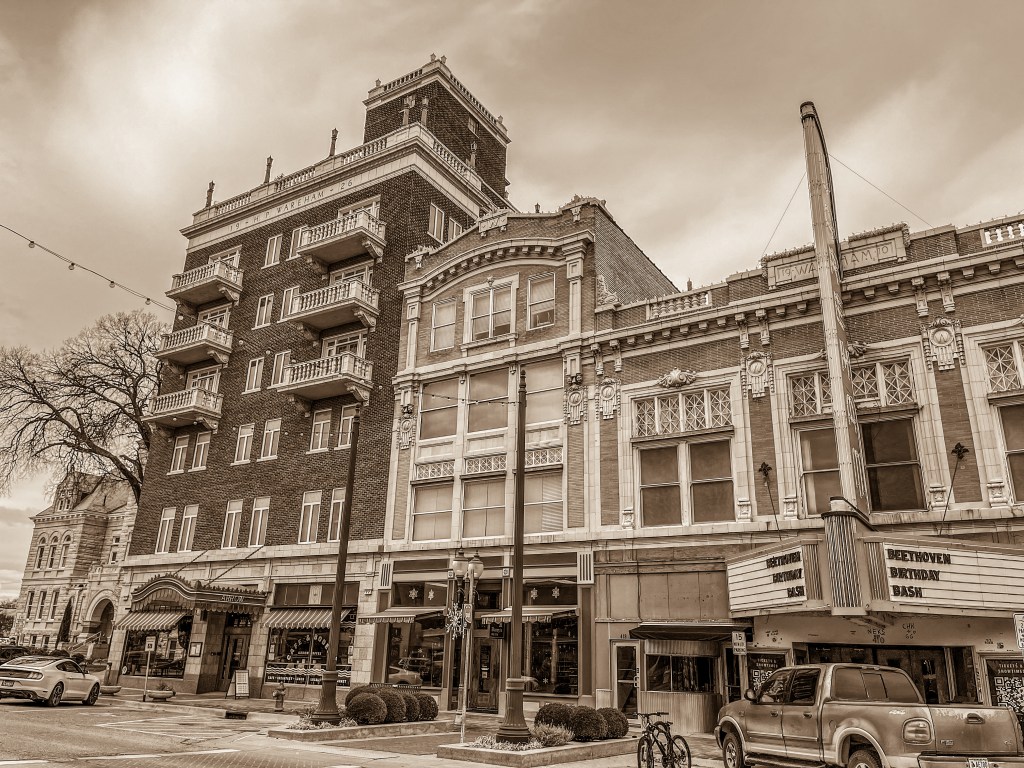
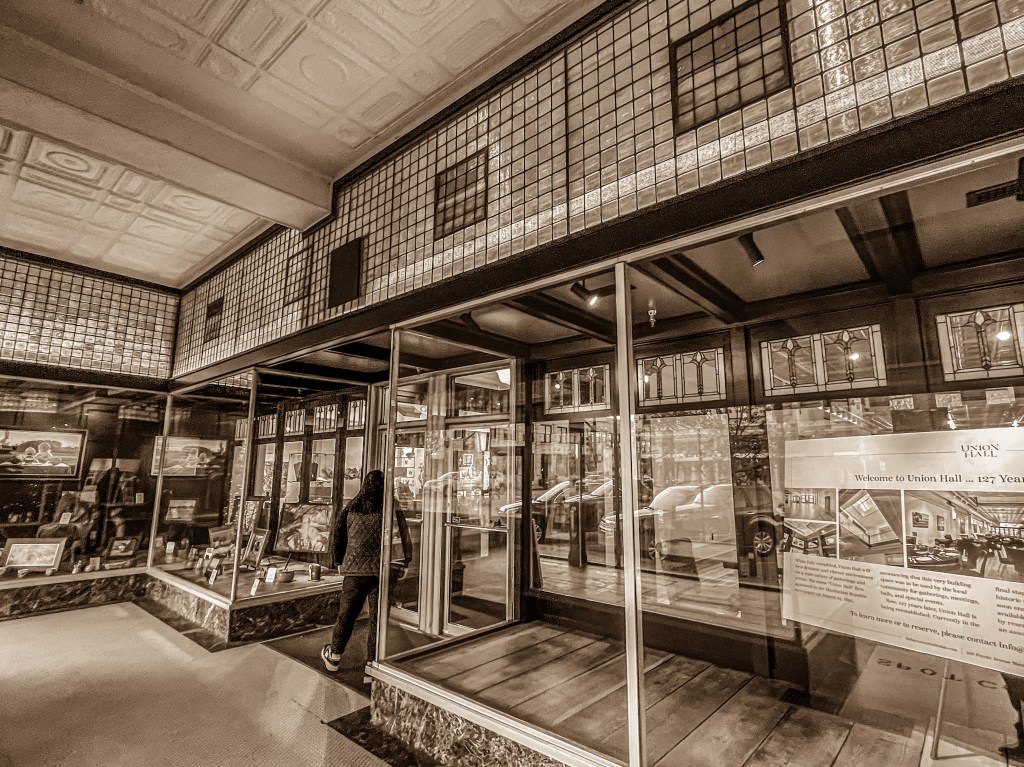
West of downtown is the Kansas State University campus and its adjacent Aggieville commercial district—a campus town for the university. Aggieville takes its name from KSU’s one-time and long-gone mascot when KSU was formally known as the Kansas State Agricultural College. Like downtown, Aggieville is full of businesses.
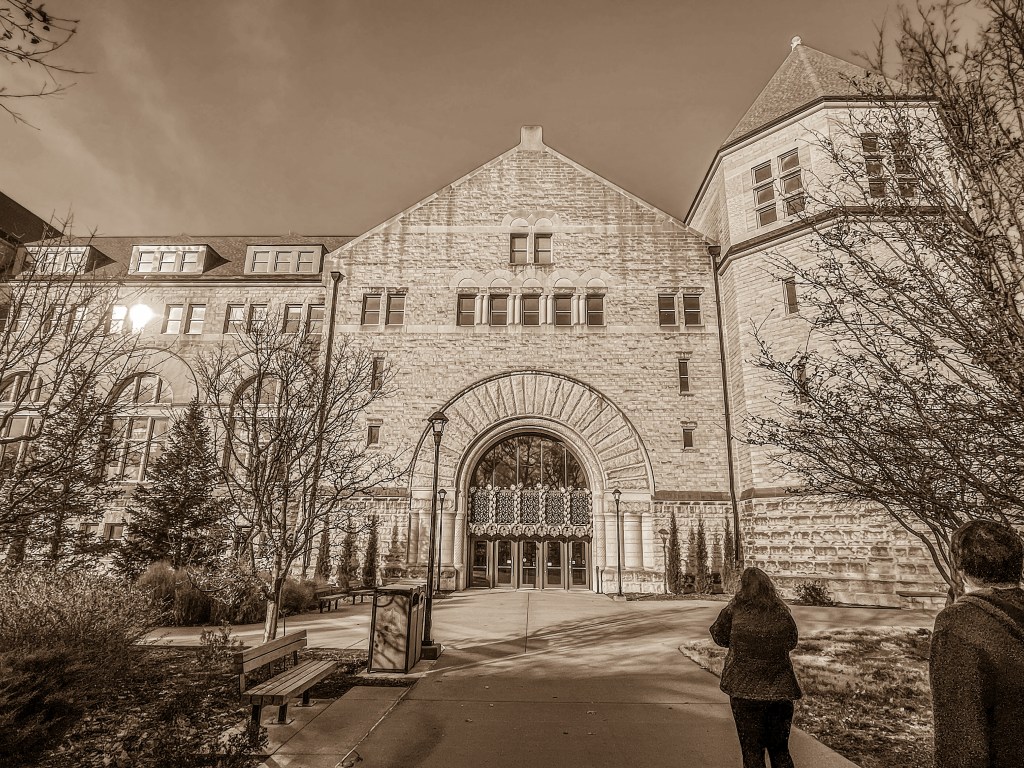
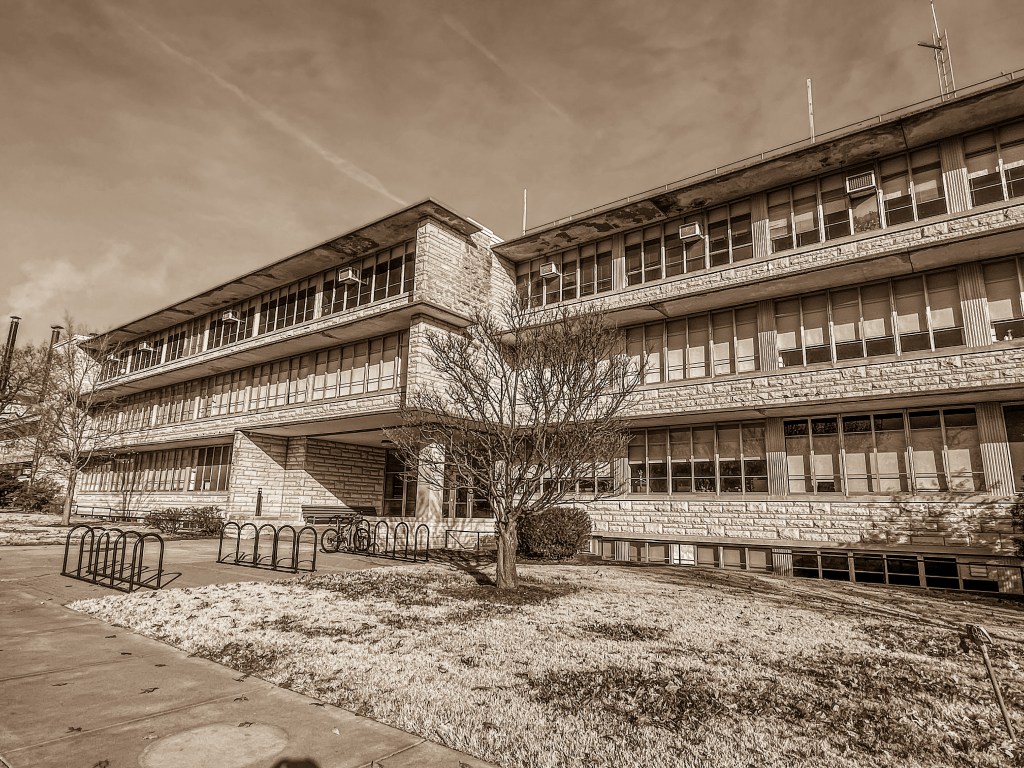
The university campus itself features a range of architectural styles—from a robust Romanesque to the simplicity of the International Style—all seemingly clad with native limestone, which helps visually unify the campus design. Manhattan sits within the Flint Hills, a region in eastern Kansas known for its extensive prairie landscapes and abundant residual flint and limestone rock underneath. The campus was devoid of students due to the Christmas break. The stark, low winter sun did help to illuminate the rich yellow patina found on many of the older campus buildings.
Hot Springs and its Bathhouses
Hot Springs, Arkansas, has been on my travel list for years. Now, with the chance to create the community’s first historic preservation plan, I’ve had the pleasure of visiting one of our country’s most distinctive heritage places, Hot Springs National Park, home of Bathhouse Row. Hot Springs rich cultural past emanates from its ancient geothermal springs, which spurred the growth of a therapeutic bathing industry well into the 20th century. By the late 1890s into the 1920s, a series of grand and more ornate bathhouses were constructed along Grand Avenue, Hot Springs’ main commercial thoroughfare, replacing earlier wood buildings. These bathhouses remain today, emblematic of Hot Spring’s position as a fashionable health resort well into World War II years. After the war and the rise of modern therapeutics, the bathhouse resort scene declined, with most of the bathhouses ceasing operations.
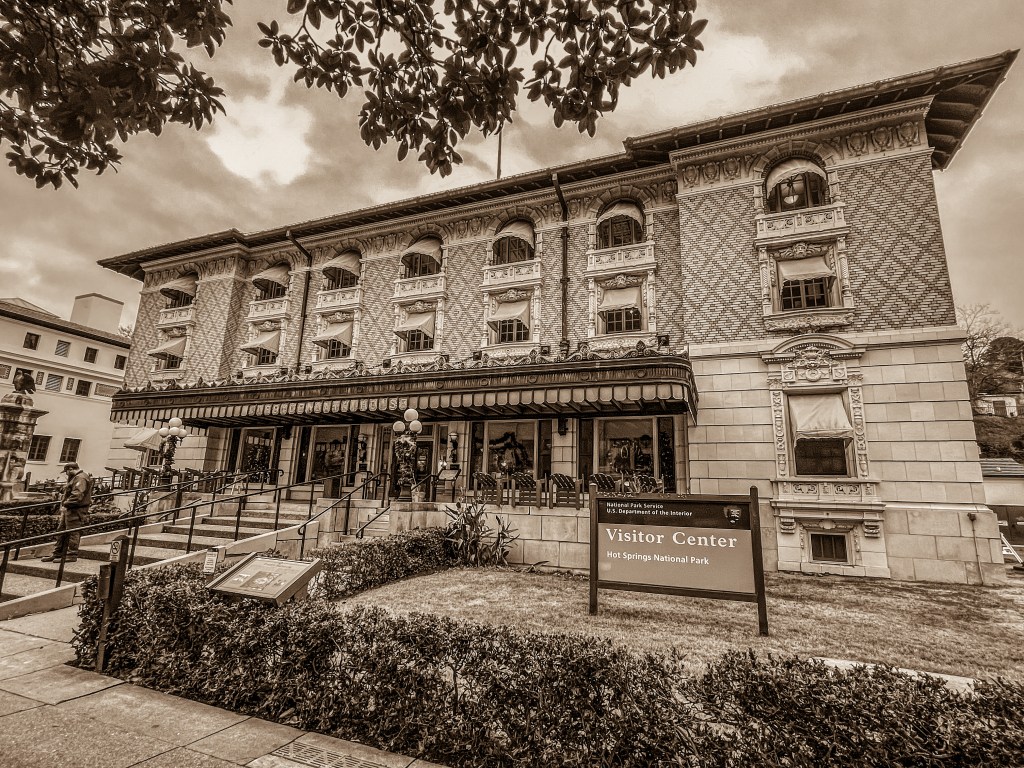
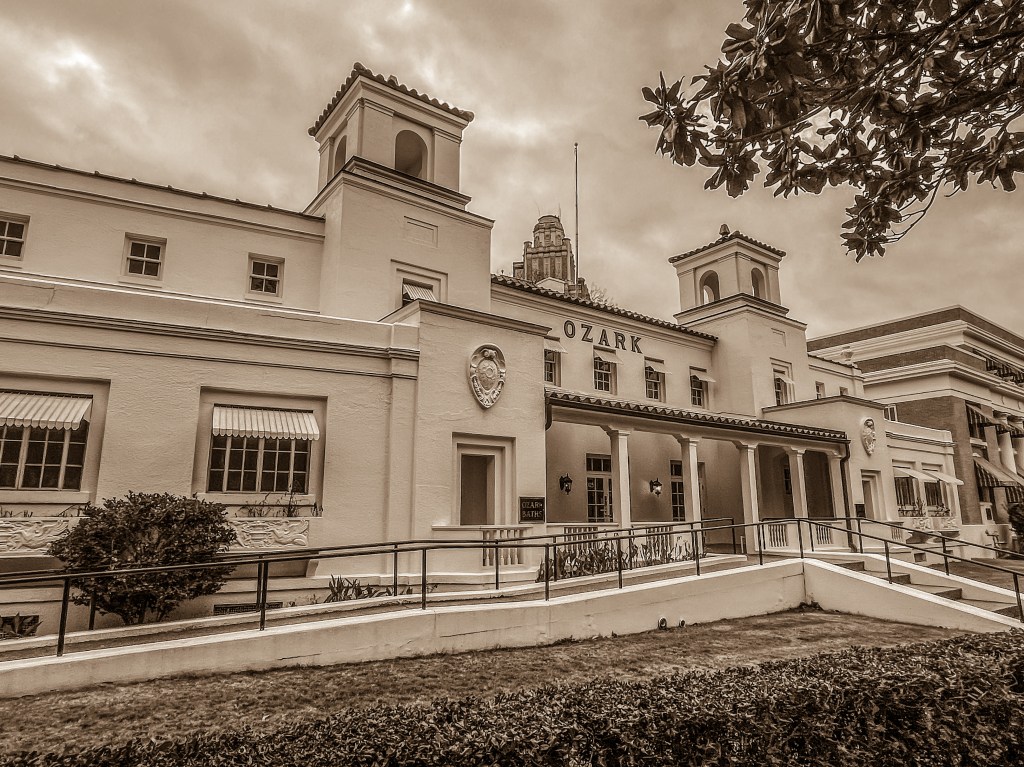
Since the 1970s, the concerted and collaborative efforts of the National Park Service and the Hot Springs community have resulted in the rehabilitation and reuse of several bathhouses. The Superior Bathhouse is now a microbrewery and restaurant. The Ozark Bathhouse is a cultural center with an art gallery displaying works from an artist-in-residence program. There are two remaining operating bathhouses, the Buckstaff, and the Quapaw, the latter offering latter-day spa services as well as access to its thermal pools. The Fordyce Bathhouse now serves as the National Parks Visitors Center, with its interior dressing and bathing rooms intact from its glory days as a fashionable bathing house. The Visitors Center provides a captivating glimpse of how the bathhouses functioned as places of healing and renewal for so many who visited.
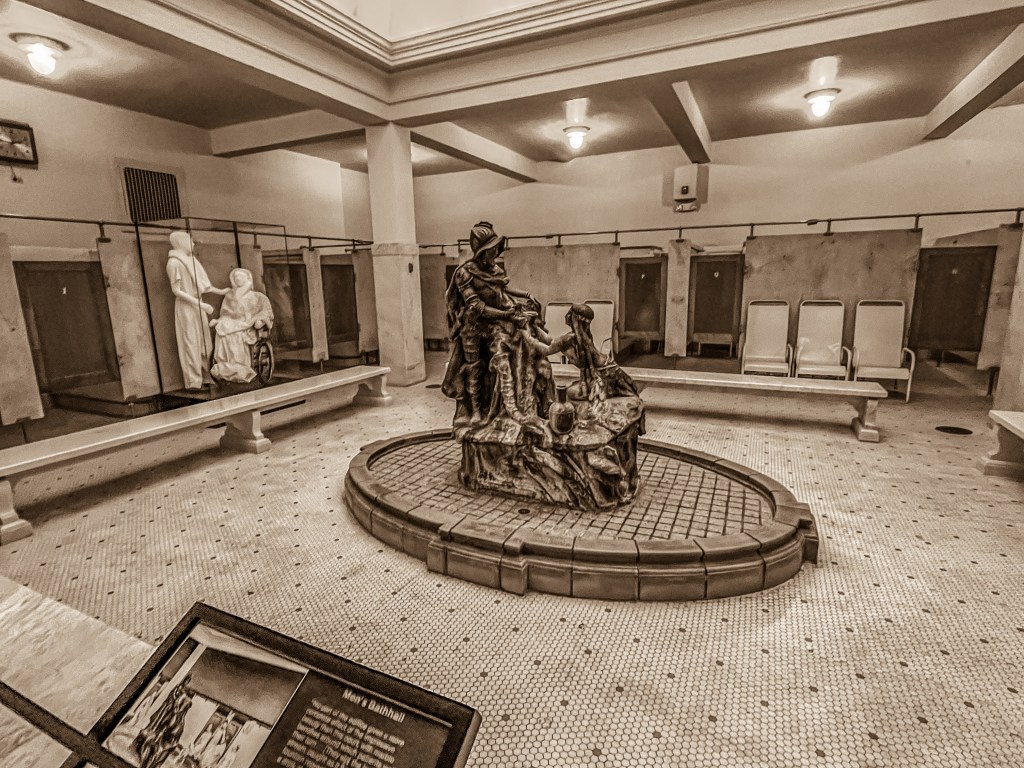
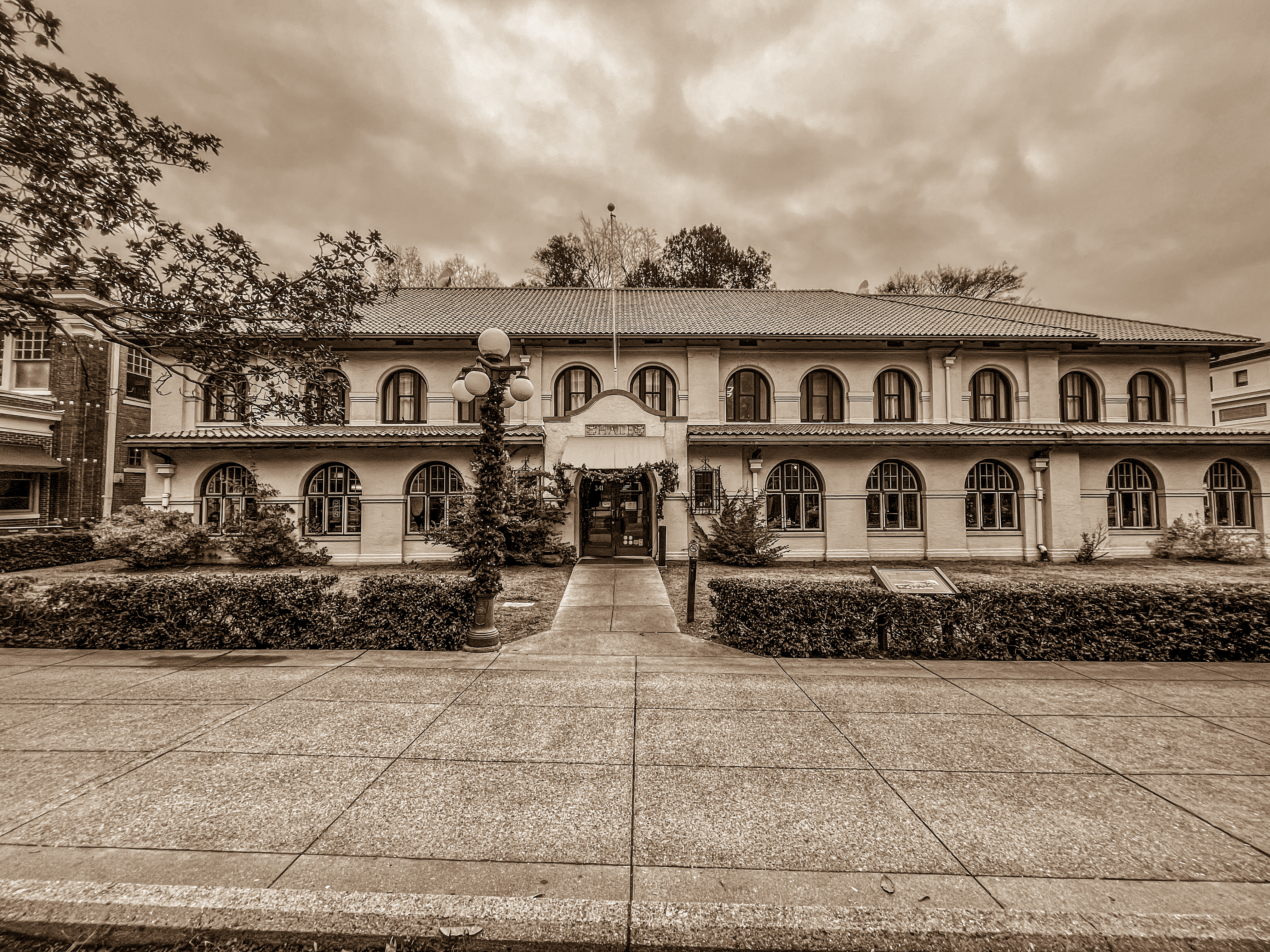
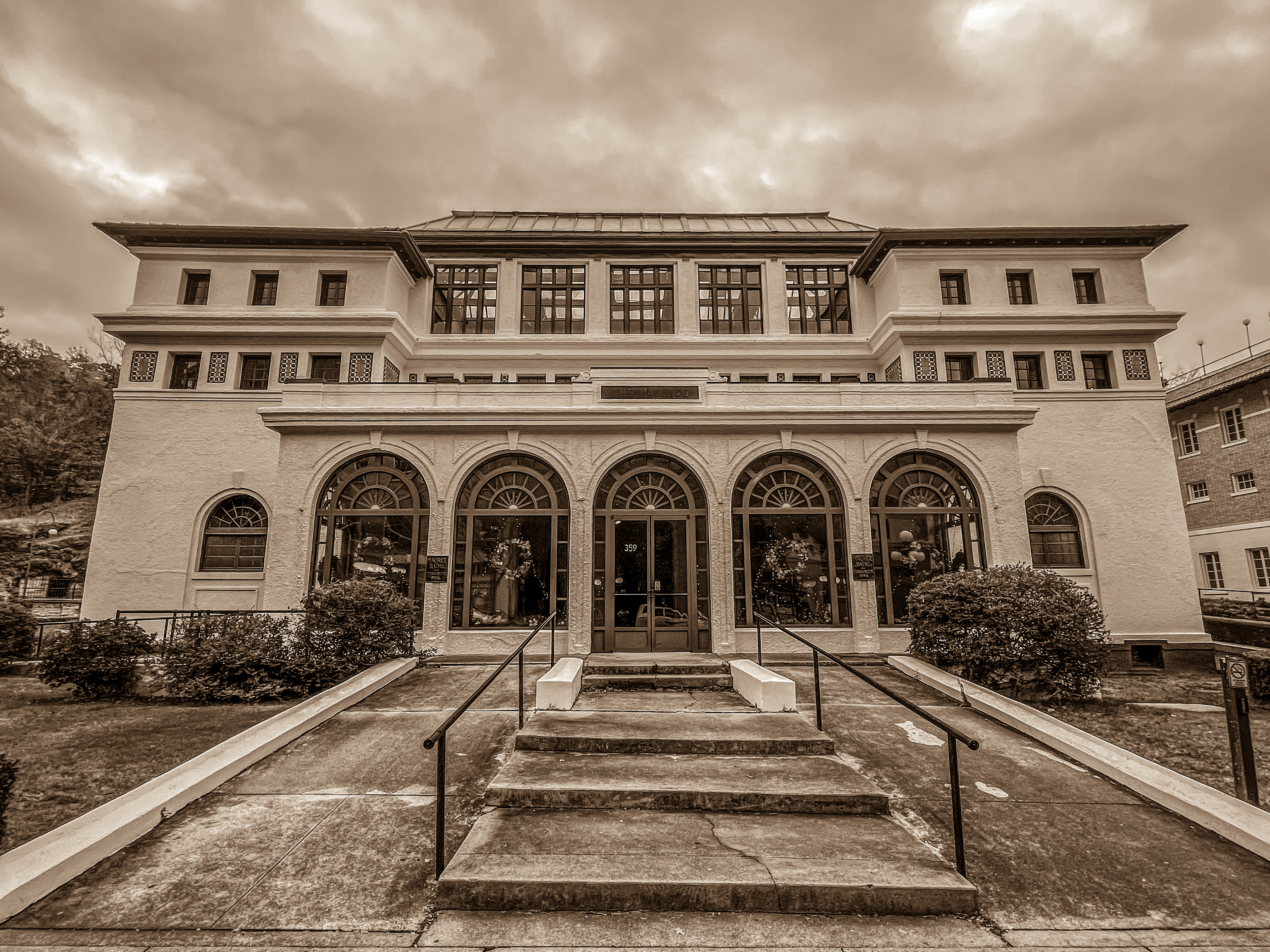
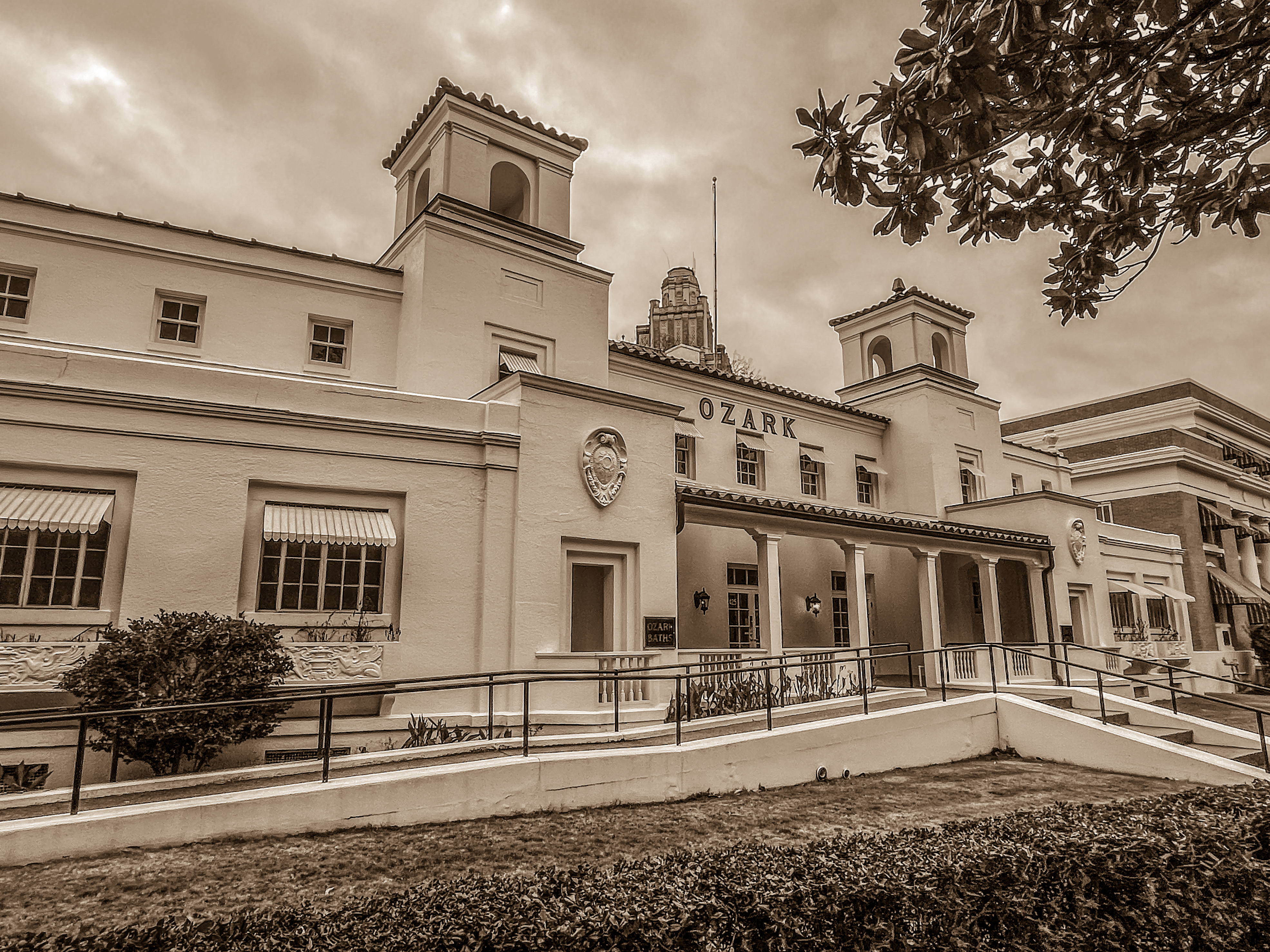
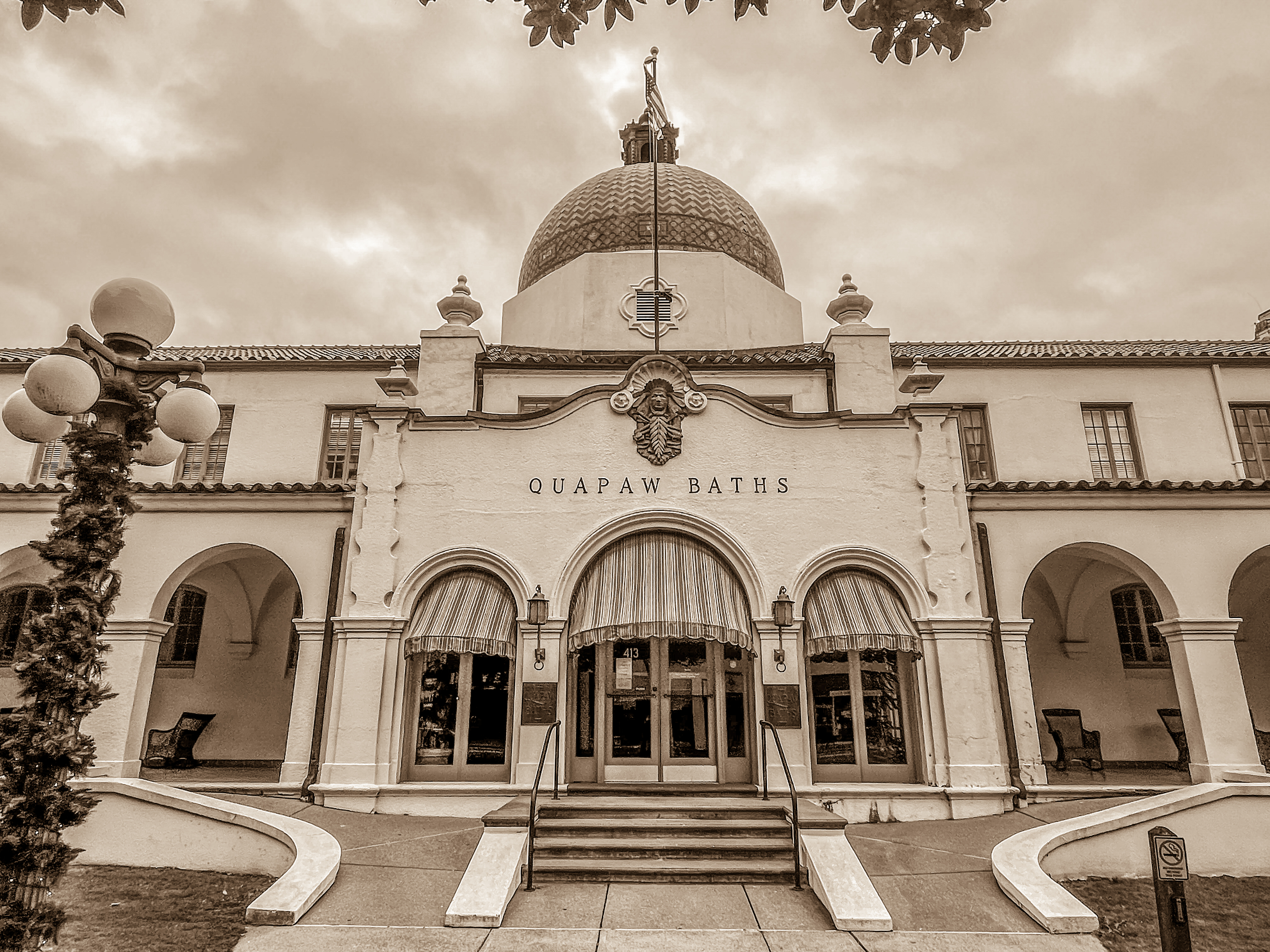
While Bathhouse Row is a stunning testament to committed preservation efforts, Hot Springs can boast a vibrant downtown district nestled along West Mountain across the street from Bathhouse Row. There are also wonderful residential neighborhoods. Hot Springs deserves more than just one blog post.
Last, I cannot leave Hot Springs without mentioning the Army and Navy Hospital, which sits majestically above Bathhouse Row on a bluff within the National Park. The first general hospital built for Army and Navy servicemen, the current main building, built in the 1930s in the Art Deco style, now sits vacant and forlorn with its future much in doubt. The hospital served as a leading medical facility during World War II. With its tremendous historical importance, solutions for its reuse must be found.
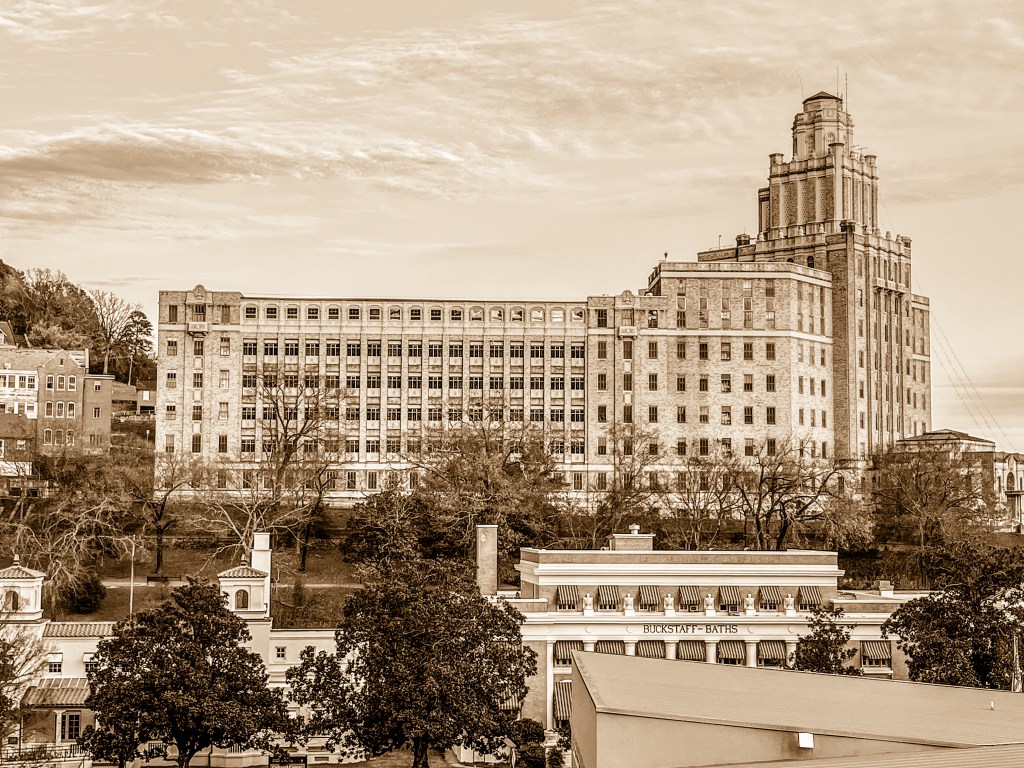
I cannot end my post without mentioning my MKSK colleague Carley Lemmon, who helped organize our visits and made them fun and exciting. I cannot wait to write more on Soulard, Manhattan, and Hot Springs in the year ahead, as well as other places we have yet to discover.


 The Places of Sense Chronicles
Leave a reply to DJB Cancel reply