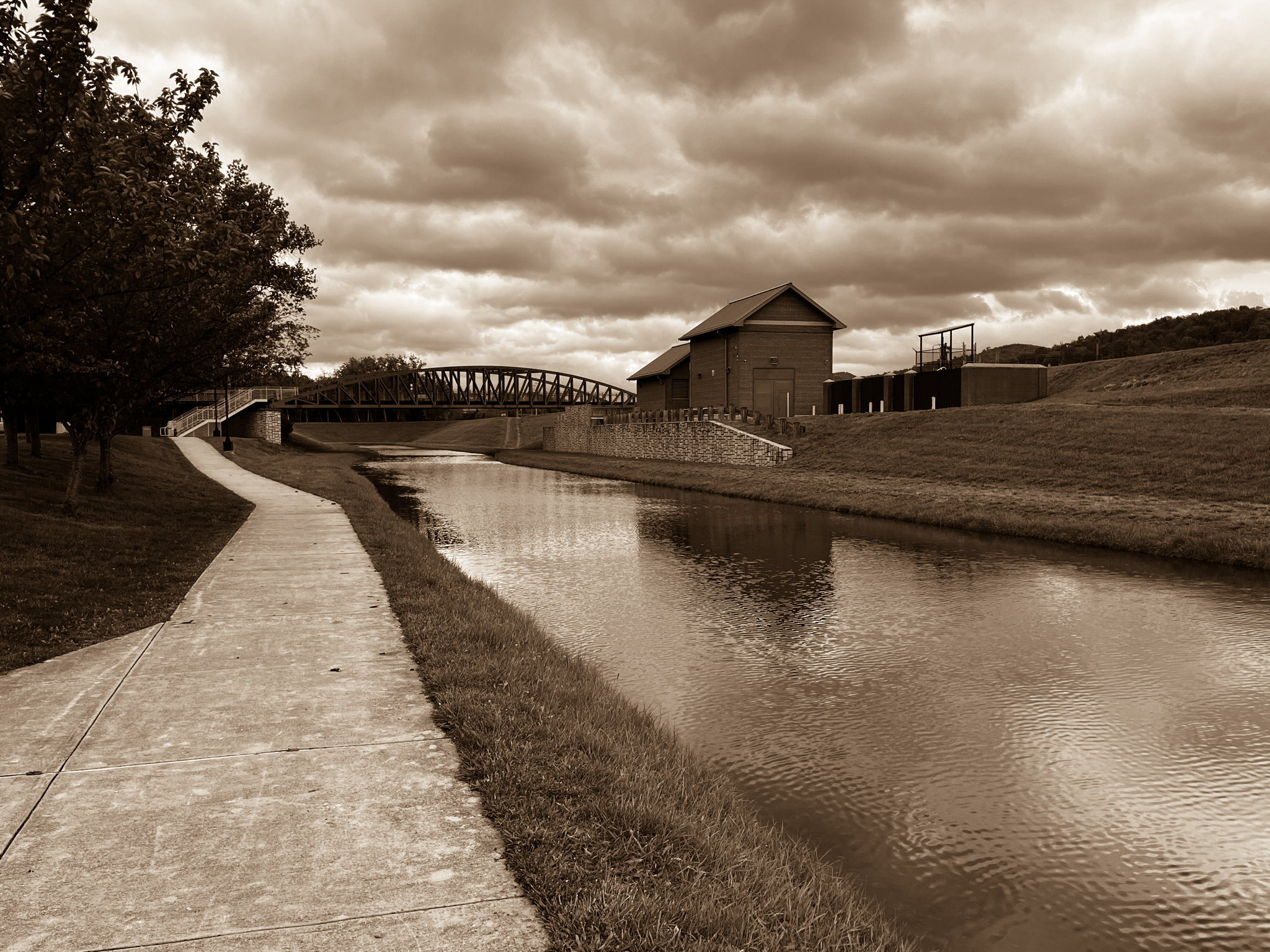
Once a Main Streeter, always a Main Streeter. Main Street is in my blood. I say that because I started my professional career as a Main Street manager years ago, in another life as they say. I served as a Main Street in Ottawa, Illinois, a small town of just under 19,000 in population located 80 miles southwest of Chicago in a region sometimes known as the Upper Illinois River Valley. At the time, Ottawa established its Main Street revitalization effort as part of a broader program to rejuvenate the older cities within the newly established Illinois and Michigan Canal National Heritage Corridor. The Heritage Corridor was the first such regional public-private partnership under the auspices of the National Park Service to recognize and revitalize a historically significant waterway and its communities along it from Chicago to LaSalle-Peru. The Heritage Corridor was made possible by an act of the U.S. Congress in the early 1980s. This story and my time in Ottawa deserve its own post. After my stint in Ottawa, I worked for the National Main Street Center where I honed in a wanderlust for small communities and their Main Streets that lasts to this very day.
Recently I had the chance to visit downtown Lebanon, Indiana as part of an ongoing assignment to update the community’s comprehensive plan. Less than a 30-minute drive from Indianapolis, Lebanon is the seat of Boone County, still a largely agricultural area but experiencing the pressures of the Indy region’s inexorable outward expansion. Hence the need for a new plan. Downtown figures in it as it should. Making downtown the economic and social center of the community is a priority in light of the growth knocking at the doorstep.
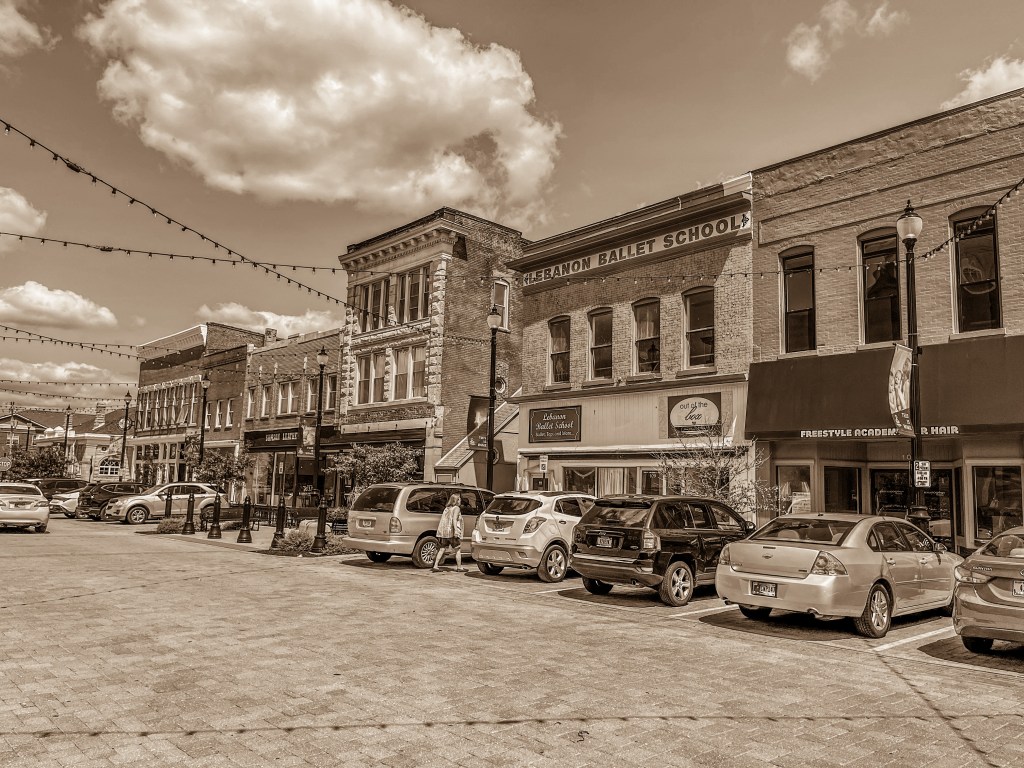
Of the very short time I had in the community – just a couple scant hours I had to walk around after a meeting – I witnessed first-hand the results of the local Main Street program’s hard work. Lebanon has had an active Main Street organization for several years. Of course, downtown Lebanon is your prototypical Midwestern courthouse square town with a majestic courthouse building placed in its square lined with one and two-part commercial buildings. The square appears mostly intact except for the edges along South Lebanon Street where buildings and storefronts still need work and empty lots testify to lost buildings. This is a common scene in small town downtowns – the edges fray away first as business activity clings closer to 100 percent corners, or in Lebanon’s case, the Boone County Courthouse. All in all, downtown Lebanon looks vibrant with many buildings sporting fresh coats of paint and new signage. There is a newly installed streetscape to top it off. People are walking about too.
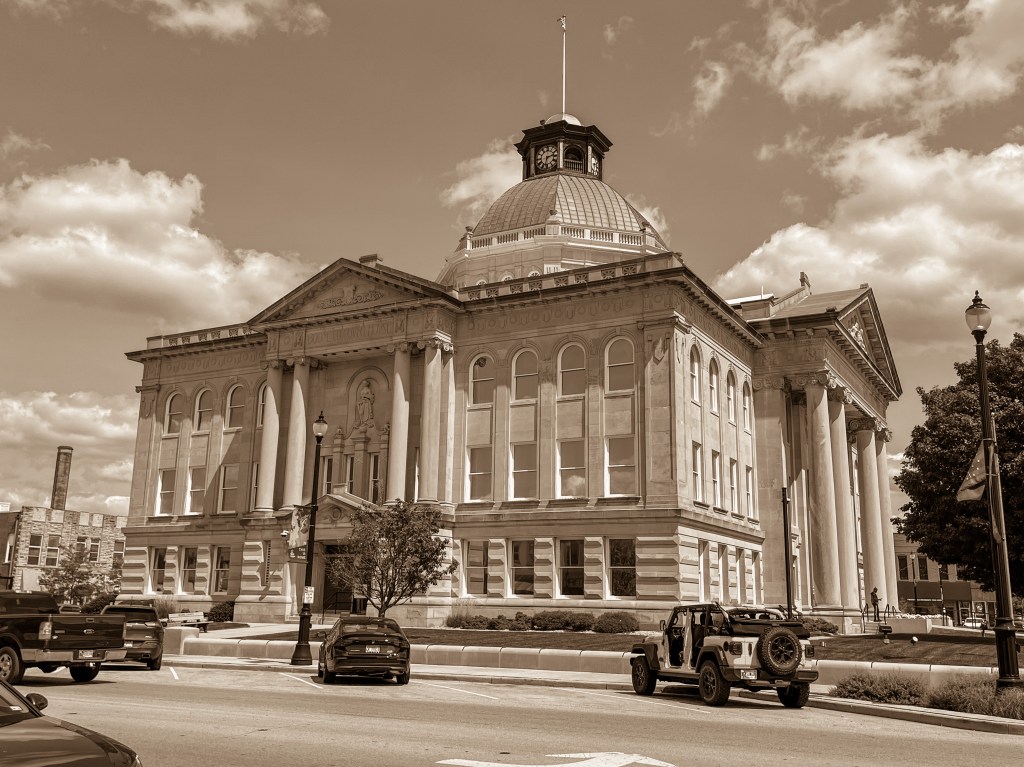
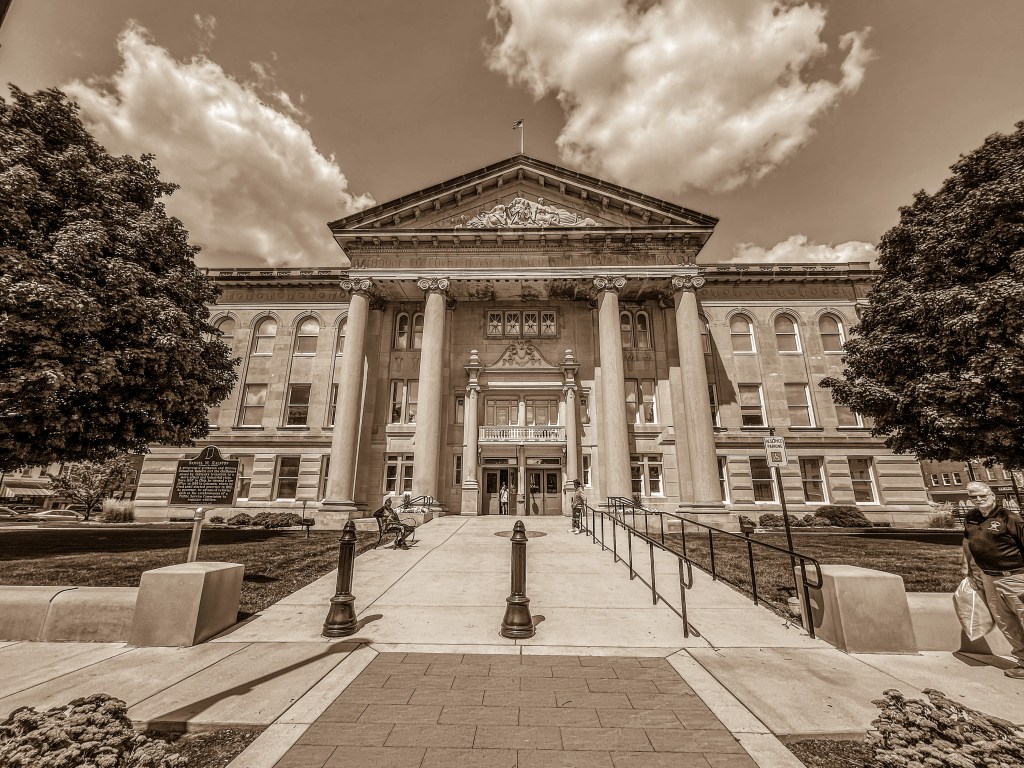
Several buildings leave an immediate impression, not the least of which is the Boone County Courthouse, built between 1909 and 1911. Constructed in granite and Indiana Bedford limestone, the Courthouse’s monumental porticoed and pedimented entrances feature three-story columns topped with Ionic capitals. The Courthouse also has a multi-sided roof dome with art-glass panels supporting a clock tower.
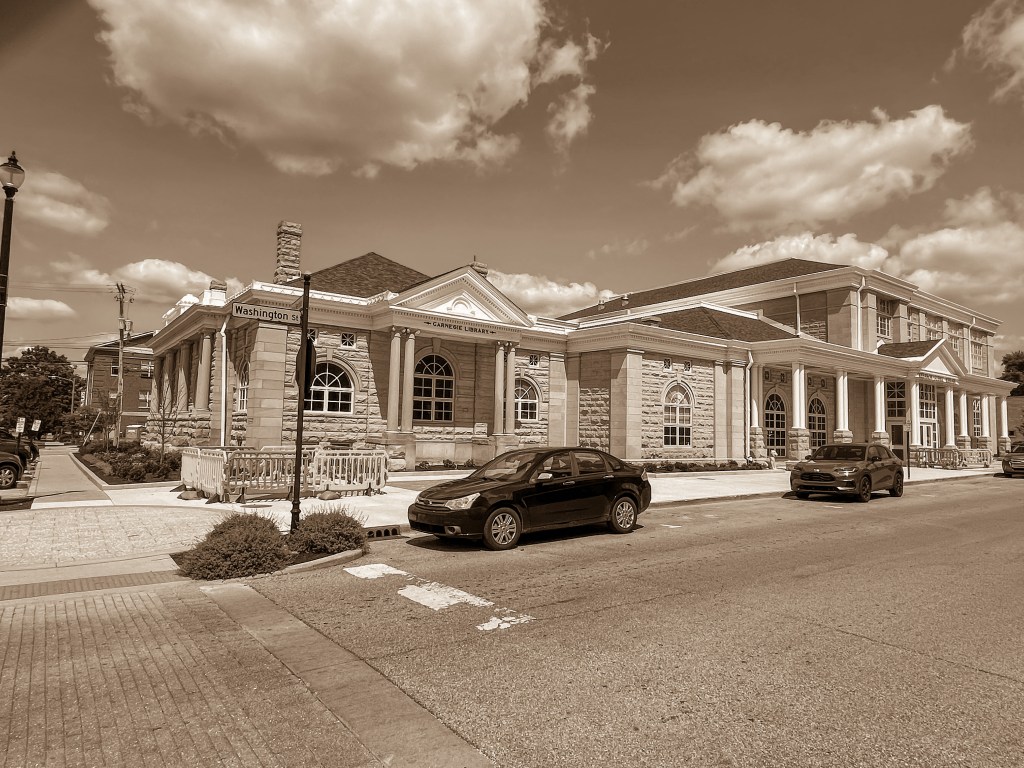
Next up on the jaunt around the square was the Lebanon Public Library housed in a 1903 Carnegie Library building. About 164 Carnegie libraries were built in Indiana thanks to Andrew Carnegie’s generosity. The one in Lebanon cost $15,000 to build. The Classical Revival style of the Boone County Courthouse carries over to the Library with columned pedimented bays enframing a series of arched windows on its south and west facades constructed of rusticated limestone. What appears to be an addition to the east is an appropriate but literal interpretation of the original. Again, my hastiness prevented me from taking more pictures of the complex. The Library’s brown-colored limestone gives the building a warm, intimate feel.

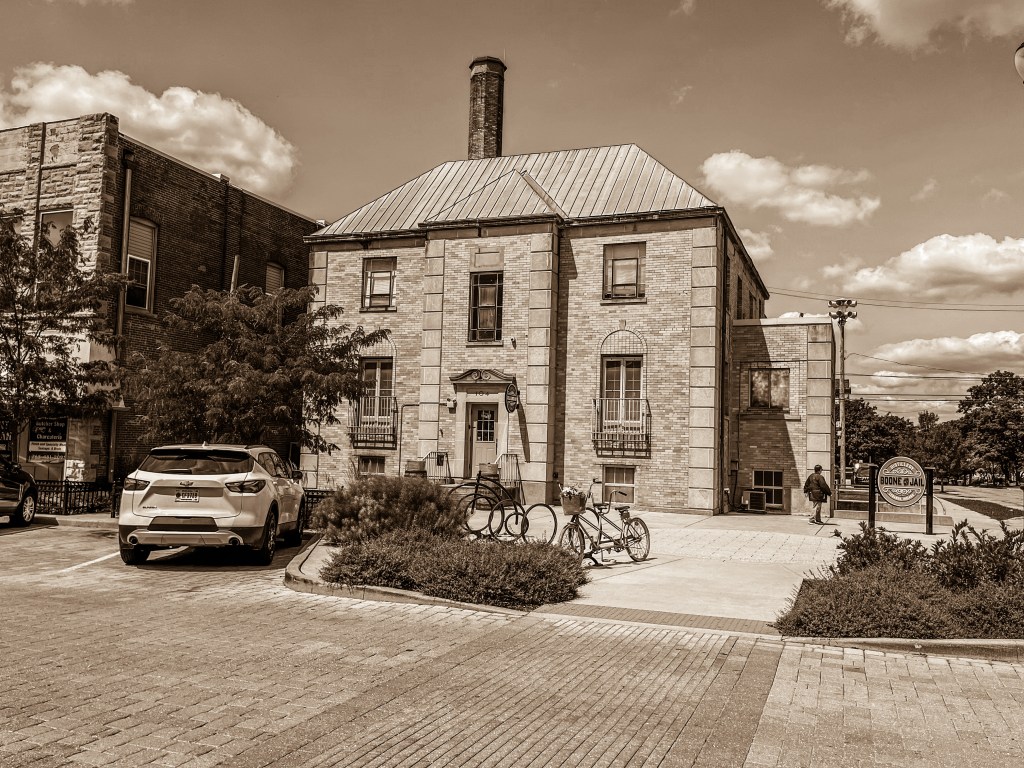
Across the street from the Library is the former Boone County Jail, decommissioned as a lock-up in 1992, now adapted into a restaurant and distillery. They do not build jails like they used to – this is one fascinating building. Designed in the French Renaissance style, the former jail features a front entrance bay flanked by two bays incorporating French casement doors with Juliet balconies on the first floor and multi-pane metal windows on the second. The building also sports stone quoins and a hipped copper standing seam metal roof. It is truly one unique jail for a Midwestern small town. This jail building brought to mind the preservation battle to save a Queen Anne-styled sheriff’s house in Ottawa, my old Main Street town. The enterprising wherewithal of my Main Street board president at the time saved that building from demolition. It seems the folks in Lebanon had the same resourcefulness. Time prevented me from taking more pictures of it – and a chance to taste what the distillery had to offer, unfortunately.
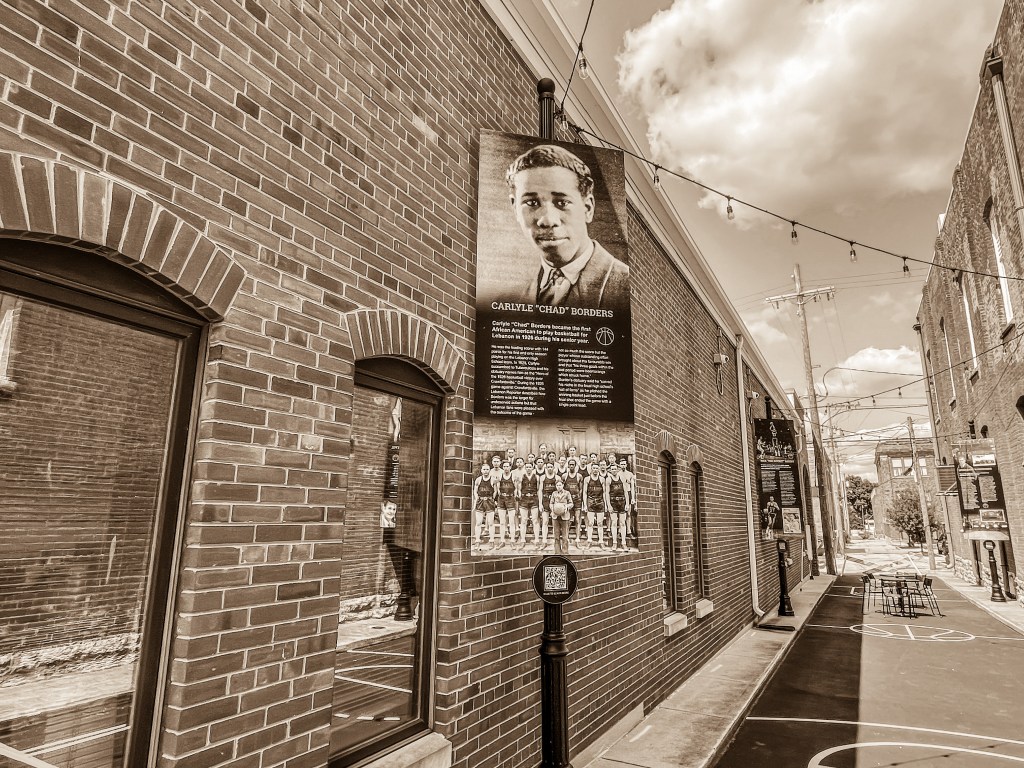
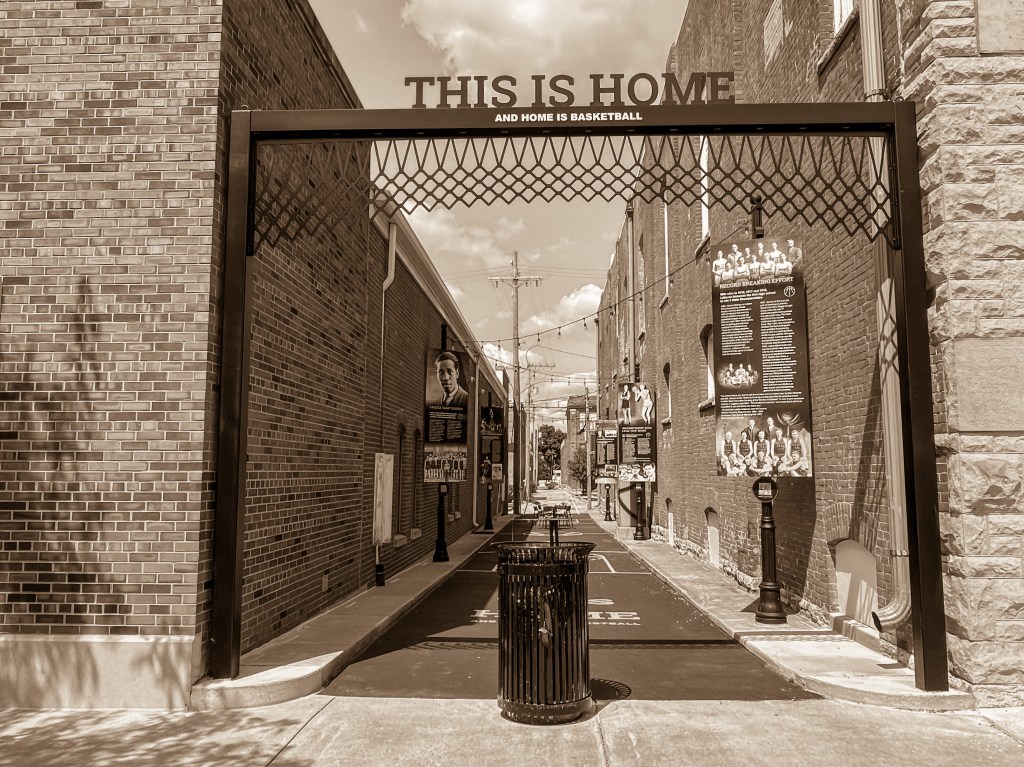
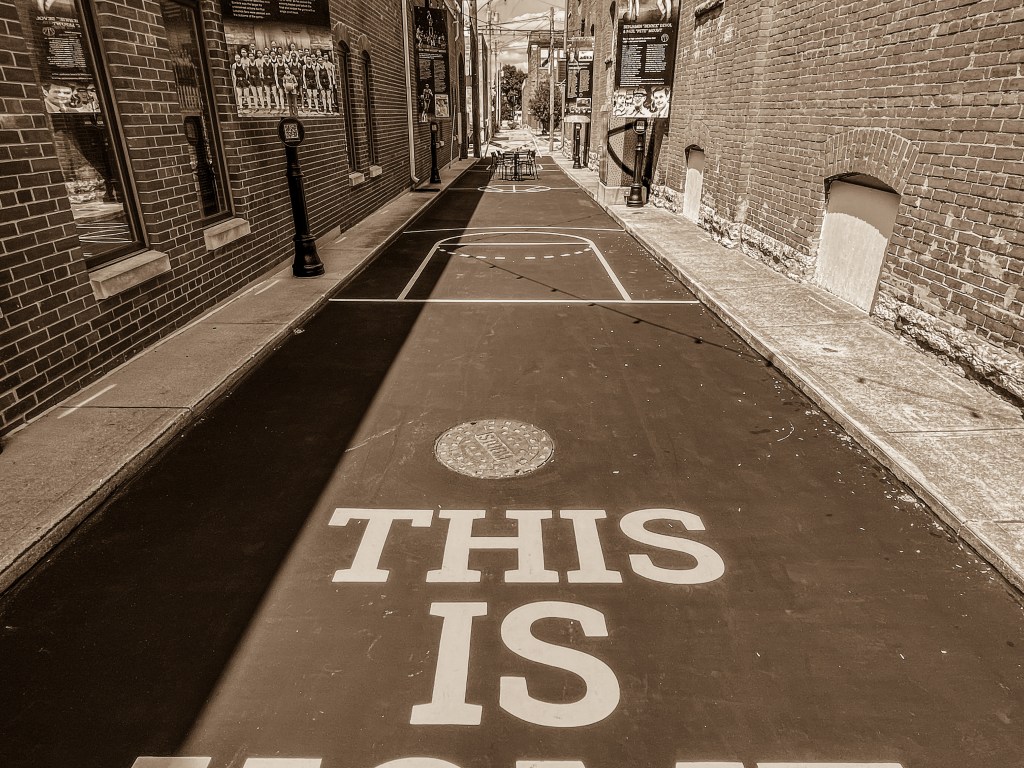
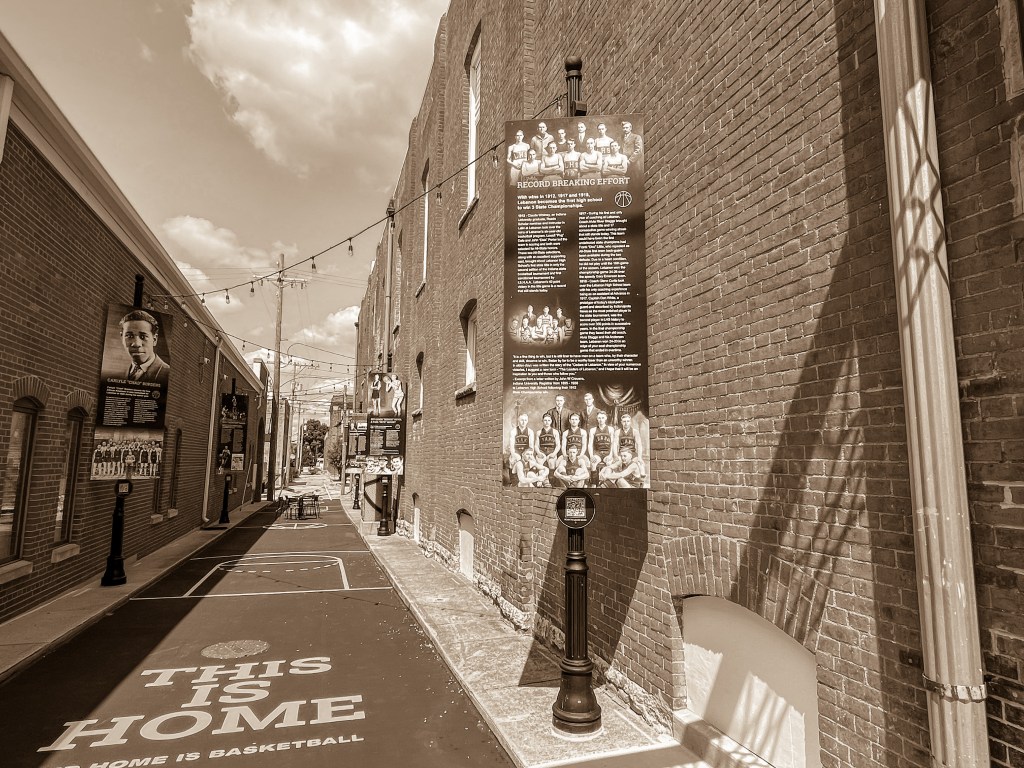
Last but not least, just down the block from the former Boone County Jail is a wonderful street activation project – the placemaking of an alleyway to a “walk of fame” for Lebanon’s basketball legends. Funded through a crowdsourcing campaign and officially called “This Home and Home is Basketball,” the project also connects the downtown Courthouse Square to the Memorial Gymnasium, once part of the old Lebanon High School and the backdrop to “Hoosiers,” the film homage to Indiana basketball. The alley project is well done. A painted basketball court takes up the alley pavement while stories of Lebanon’s illustrious basketball past are told through interpretive panels fastened to pole standards installed in the sidewalks. Quick response codes at the bottom of each panel give access to online narratives of Lebanon’s basketball greats. Placemaking and storytelling come together to help transform an ordinary alley space.
My time in downtown Lebanon was all too brief. It is a community with Main Street in action. Yes, in many ways, I miss my own Main Street days – the chance to work with many people to regenerate a historic downtown. There is also never enough time to see all the Main Streets out there. But I hope to be back in Lebanon soon to learn more about their successful Main Street efforts.
Source for background information: More than Books: Carnegie Libraries in Indiana, Indiana Historical Society


 The Places of Sense Chronicles
Leave a comment