
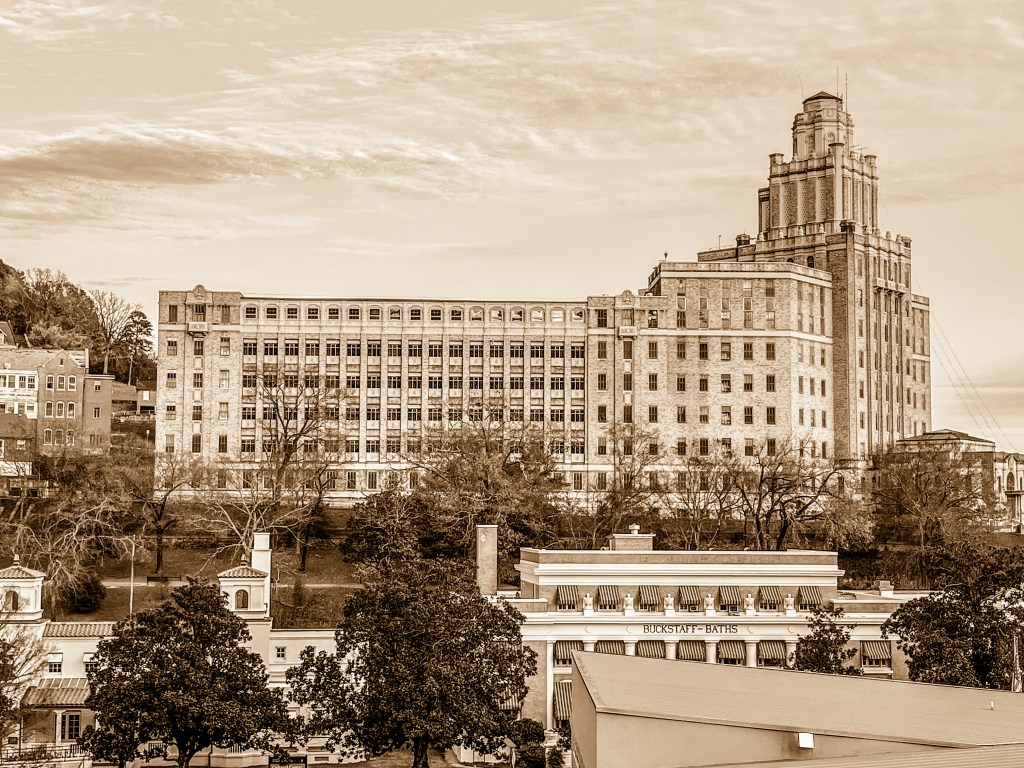
Just around the time of last Christmas, I wrote about my travels to Hot Springs, Arkansas, for a preservation planning assignment. I mentioned the Army and Navy General Hospital in that blog post – a prominent landmark building worthy of further discussion. After visiting Hot Springs again this past February, I had the opportunity to see the hospital once more, take additional photos, and speak with residents about what this building means to them.
As I described in my Christmas post, the Army-Navy Hospital looms over Hot Springs, its famous Bathhouse Row, and Central Avenue National Register Historic District in a rather striking and dramatic way. It sits on a small hill that descends from the Zig Zag Mountains, home to the thermal springs of Hot Springs National Park, and part of the more extensive Ouachita Mountain range stretching from northern Arkansas into southeastern Oklahoma. As one local architect put it to me during my visit, the Army and Navy General Hospital is our “castle.” An apt analogy, I would say – like European cities with their medieval counterparts guarding their populace below the ramparts. Edinburgh Castle in Scotland comes to mind, sitting majestically upon an extinct volcano, a symbol of military and royal power. The Army-Navy Hospital has its own majestic aura, albeit with the bathhouses below, a potent symbol for healing and restoration.
While the present building on the site dates to 1933, the hospital’s history extends much earlier to the first decades of Hot Springs’ growth and settlement. The complex, which comprises more than thirty buildings, began as a hospital treating both Army and Navy patients in 1887, following U.S. Congress’s recognition that Hot Springs, with its proximity to the therapeutic waters of the National Park, would make an ideal location for a treatment facility.
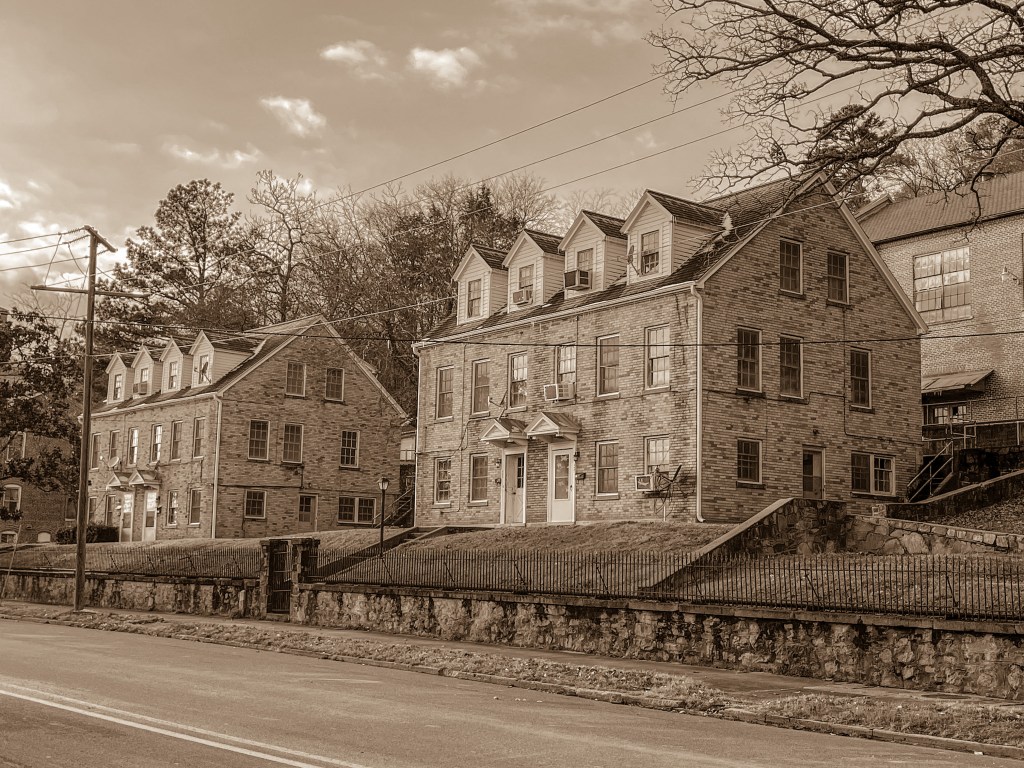
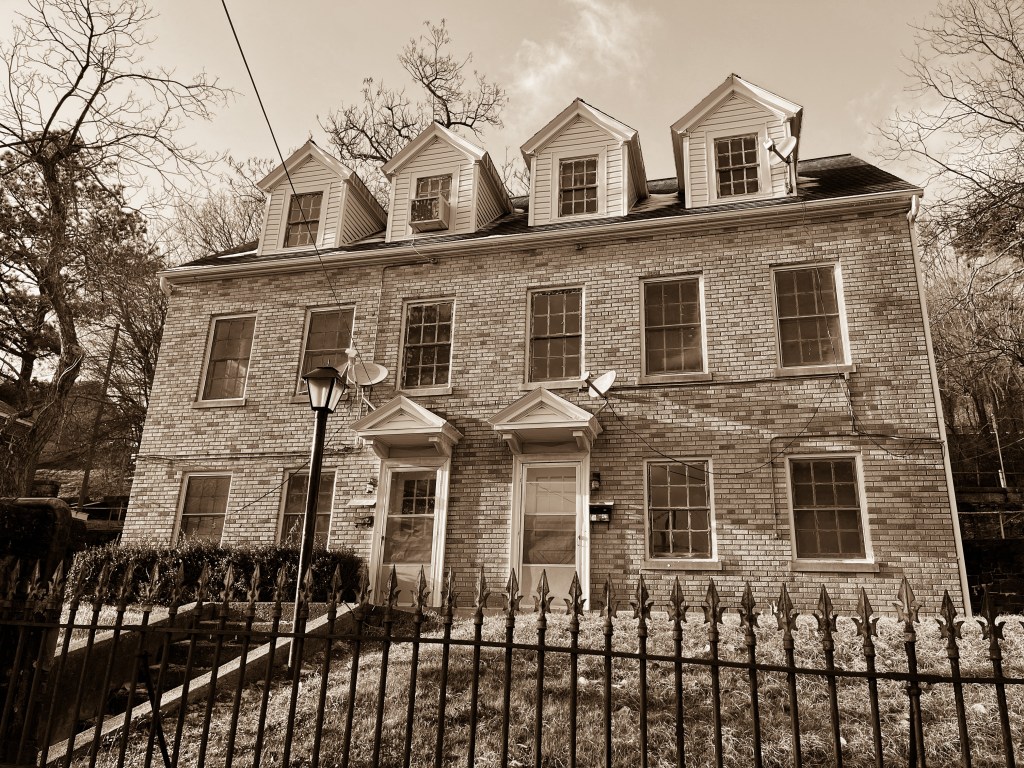
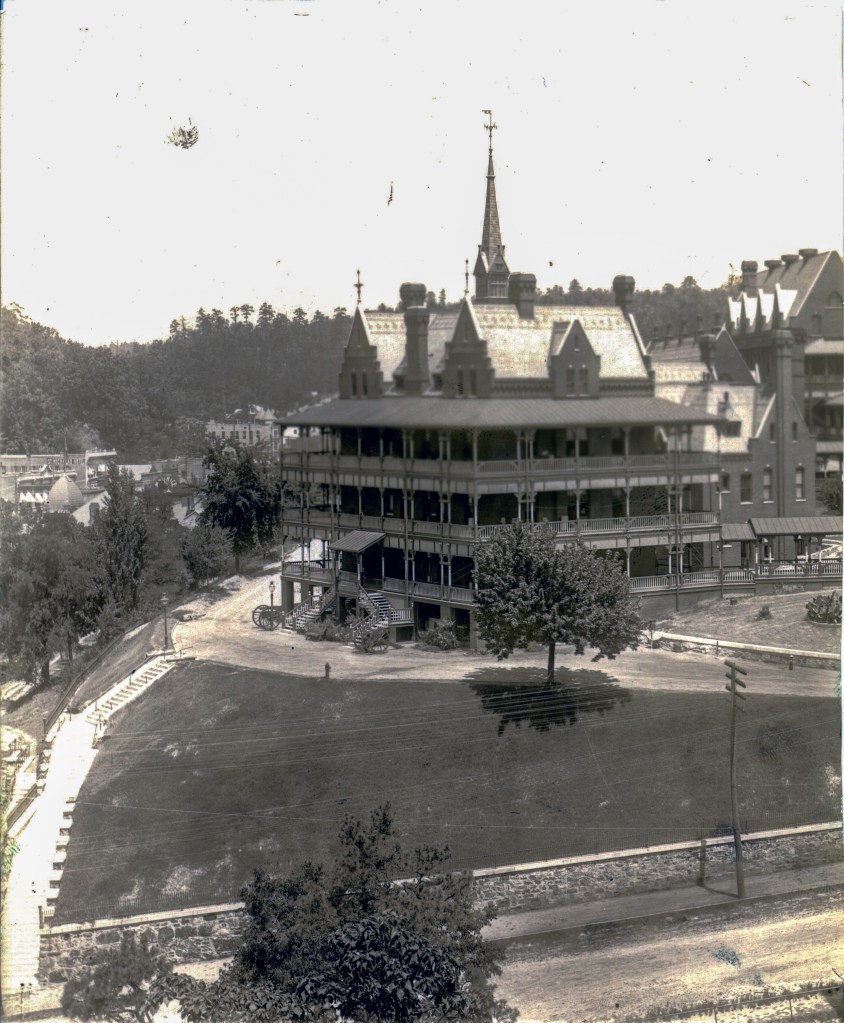
The first hospital building was designed in the High Victorian Gothic style, featuring a four-story wrap-around veranda. This design, I’m sure, was intended to provide patients with access to sunlight and fresh air, as well as a select view of the emerging Bathhouse Row and central business district below. Many of the hospital complex’s medical and ancillary buildings from this late Victorian period, up until the construction of the new hospital at the advent of the Great Depression, still remain. These include the wonderful officer apartments, built as duplexes that line the southern edge of the complex along Malvern Avenue. They remain vacant and uninhabited today.
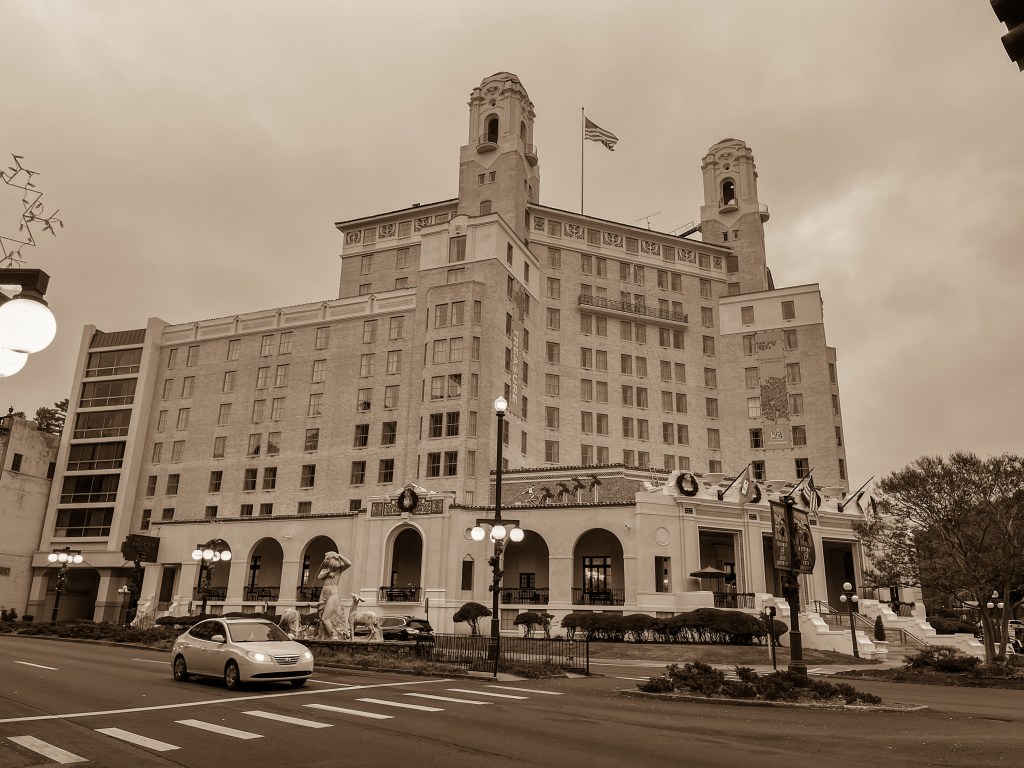
When it came to building the current main treatment hospital in 1933, the Department of War, as it was then known, spared no expense in making it a monumental medical facility of its time. It sits on the edge of the hill with its main entrance bay southwest toward Central Avenue and Bathhouse Row. In my previous post, I mistakenly cited its style as Art Deco. According to its National Register nomination, it is defined as Spanish Revival, reflecting some of that style’s influences in downtown Hot Springs, particularly the Arlington Hotel, located just below the hospital, which was constructed in 1924. Its central entrance bay features a four-story ziggurat tower lined with alternating pilasters and panels perforated in a diamond-shaped pattern. The pilasters are topped with flat capitals and urns. Flanking the entrance bay are the hospital’s two large wings, comprising patient and treatment rooms, which hug the hillside closely.
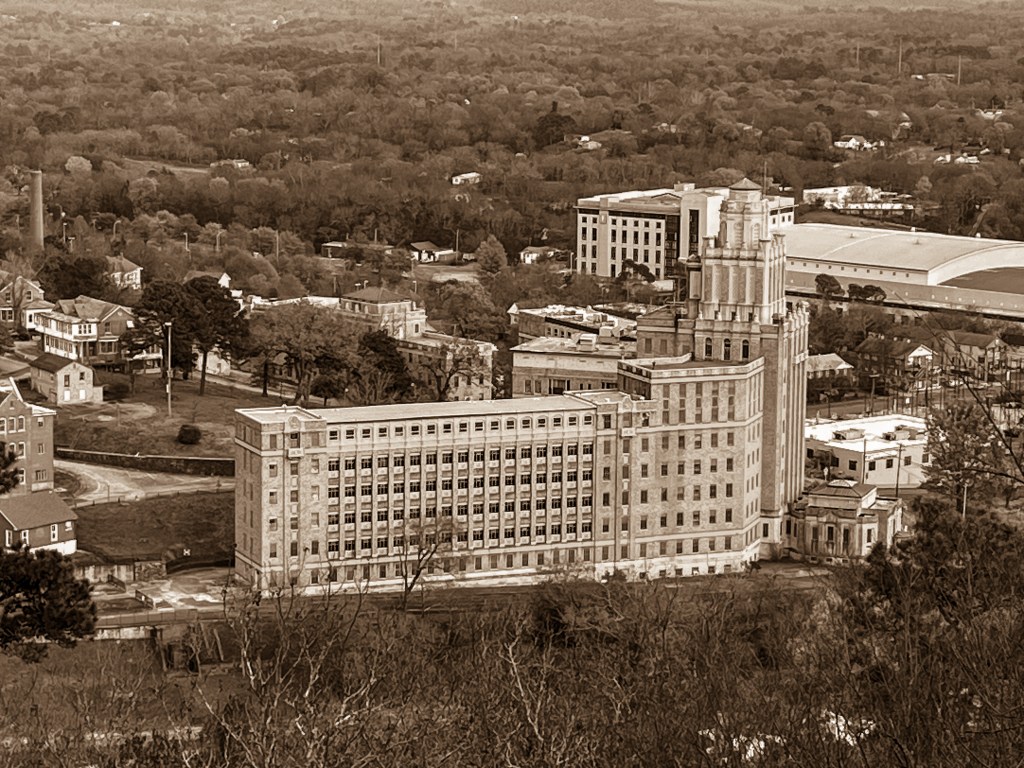
During World War II, the hospital and its 412 beds served as a major center for treating patients with polio and arthritis. As the war ended in 1945, it became a leading destination for wounded and convalescing soldiers returning from the war front. With the nearby bathhouses, returning veterans had the benefit of the latest medical treatment provided by the Hospital and access to the soothing waters of the thermal springs within the Central Avenue bathhouses beneath the hill. According to accounts, the Hospital served more than 100,000 veterans by 1945. It operated as a hospital facility until 1960.
This Army-Navy Hospital, this castle of healing and hope, has an uncertain future, as I noted in my previous post. It remains vacant and forlorn as it sits on its hillside – although its presence conveys a powerful symbol of America’s commitment to its servicemen. It’s a tangible ghost of its illustrative past. There has to be a future for this place.
The source of information for the Army and Navy General Hospital: National Register of Historic Places, Army and Navy General Hospital Historic District in Hot Springs, Garland County, Arkansas, Reference Number 05001590.

 The Places of Sense Chronicles
Leave a comment